
Last updated August 25, 2026
Free on-site gate assessment - hinges, posts, and your LiftMaster or Nice gate operator checked before anything is quoted
The assessment is free and the quote is the invoice.

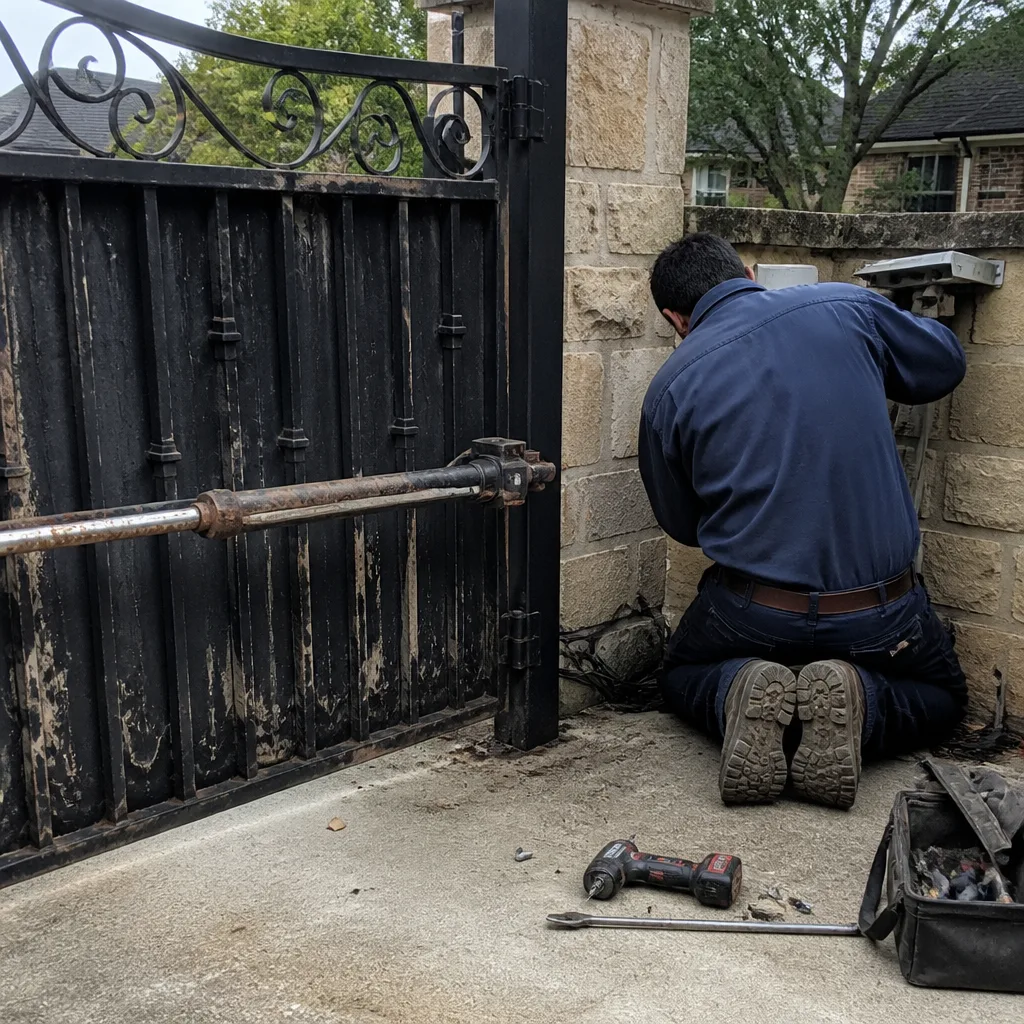 Before
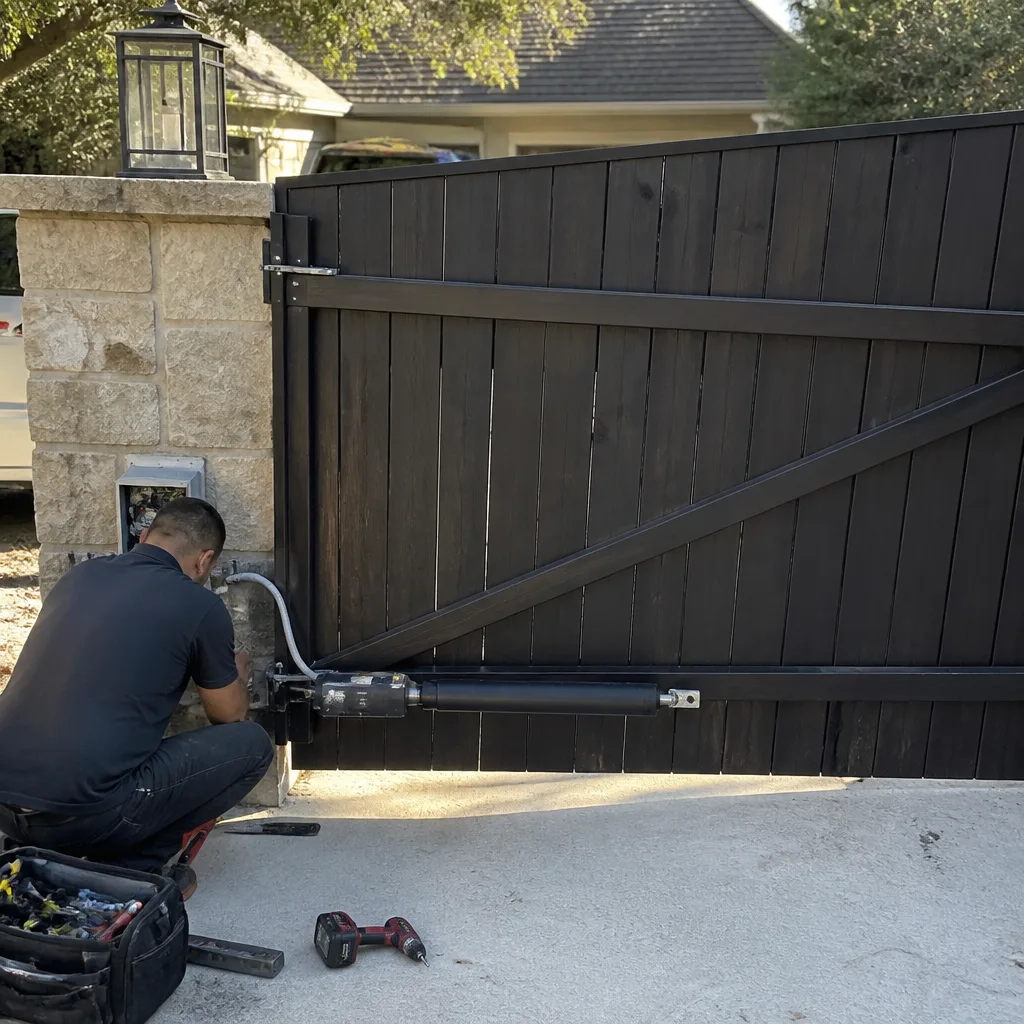 After
After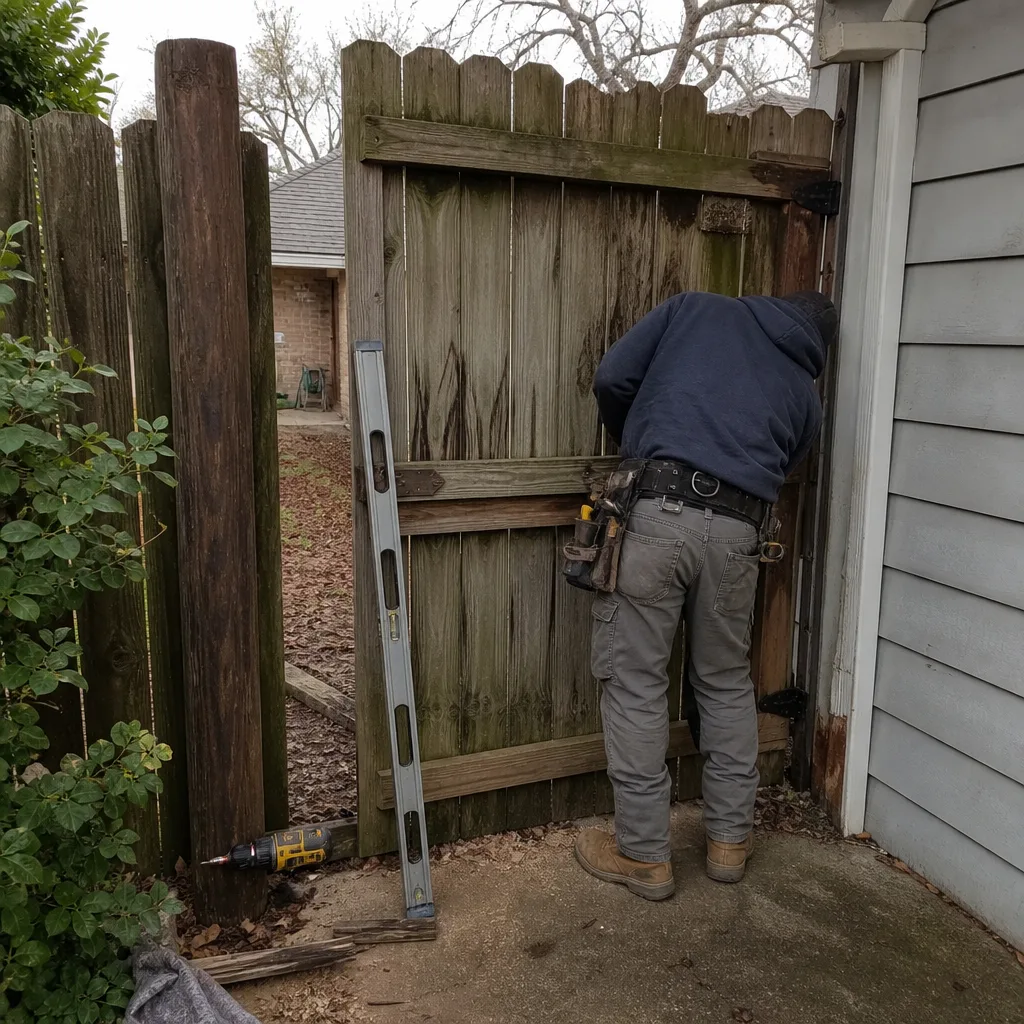 Before
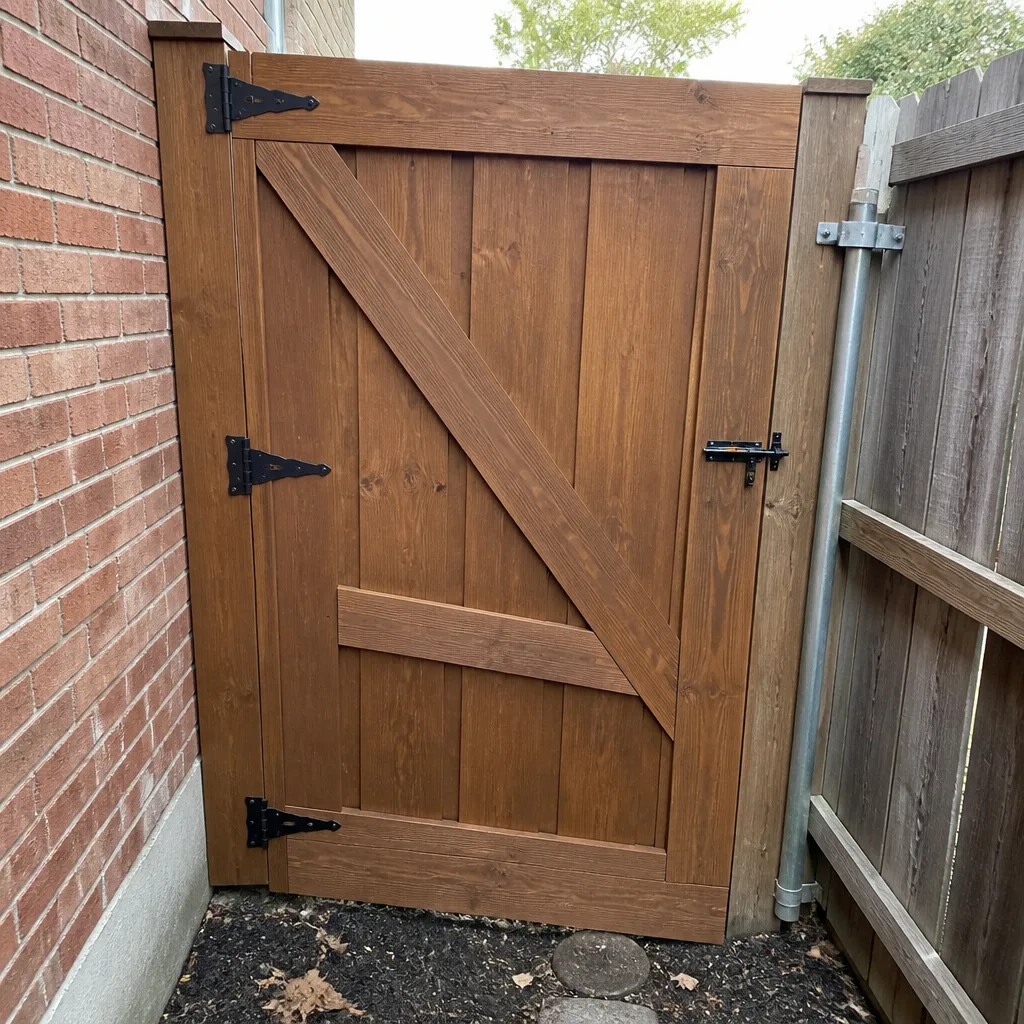 After
After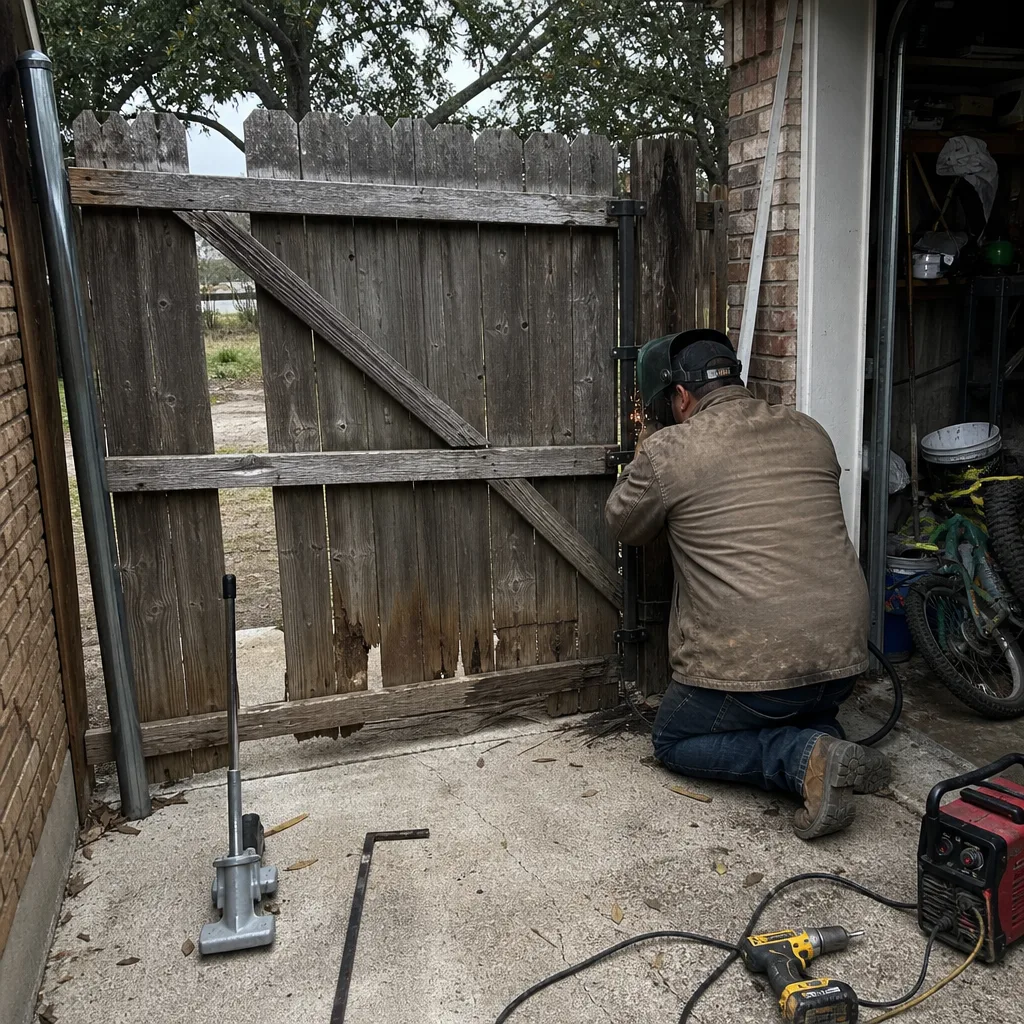 Before
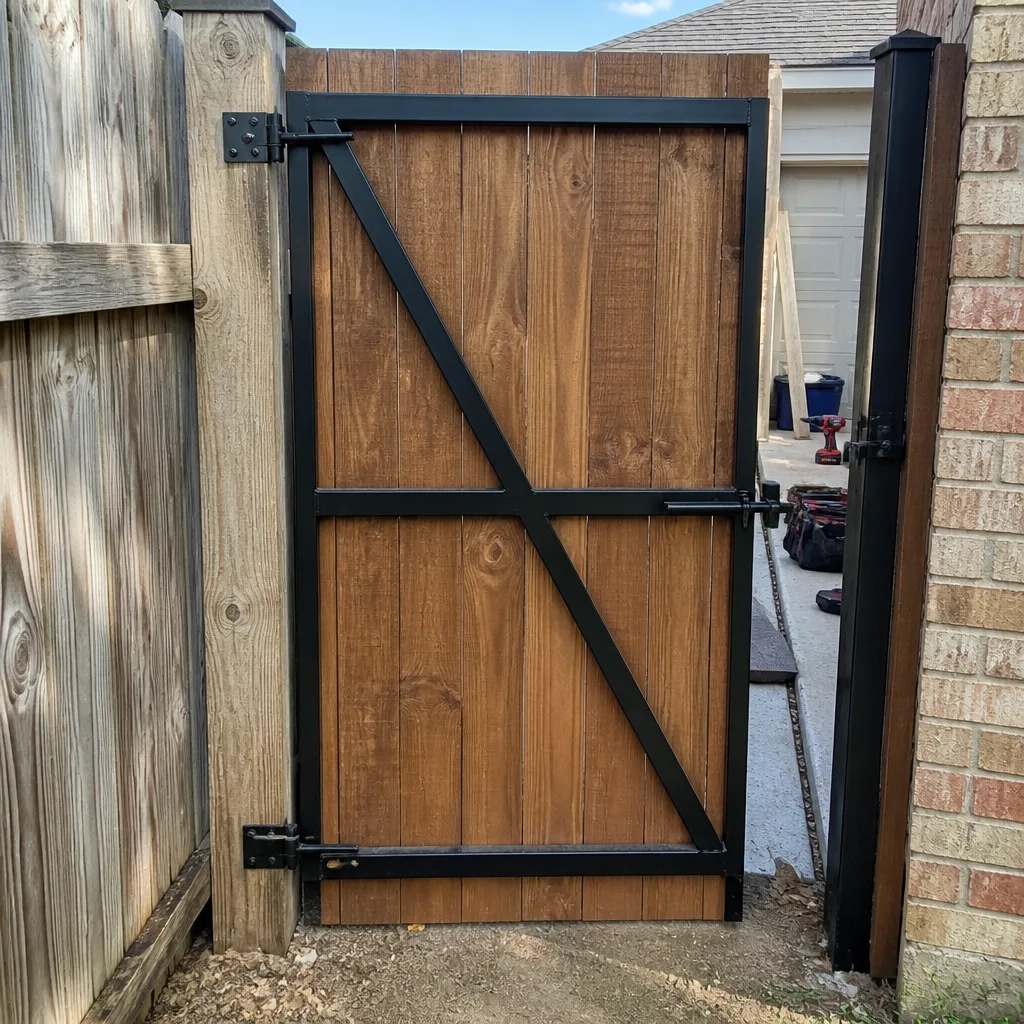 After
AfterThe Complete Guide to Gate Repair in Kennedale
Most homeowners in Kennedale replace a gate two or three times before they realize the gate itself was never the problem. The post shifted, the hinge wore out, the opener was misaligned from the day it was installed. We have been called out to homes off Kennedale Parkway and up and down Sublett Road where a brand-new gate was hanging crooked within six months, and the owner assumed that was just how gates behaved. It is not. A gate that is hung right, balanced right, and automated right will open and close smoothly for twenty years or more. This guide explains how gate systems actually work, what fails and why, what repairs cost in the Kennedale market, and how to spot the difference between a quick fix and a repair that will keep your gate working until your grandchildren inherit the house.
Quick Answer
Gate repair in Kennedale typically costs between $95 and $450 for common fixes like hinge replacement, wheel alignment, opener adjustments, and sensor or keypad repairs, with most jobs completed in a single visit. The most common gate failures in this part of Tarrant County are sagging steel or iron gates due to loose or worn hinges, and opener failures caused by spiderwebs, ants, and moisture getting into the control board. A gate specialist can usually diagnose the problem over the phone and give you a firm price before anyone drives out, so you are never paying for guesswork.
Table of Contents
- How a Gate System Actually Works
- The Most Common Gate Repairs in Kennedale
- What Gate Repair Costs in Kennedale
- What You Can Check Yourself vs. What Needs a Pro
- Gate Opener Problems and How to Think About Them
- How to Choose a Gate Repair Company
- Common Mistakes to Avoid
- When to Call a Professional
- Frequently Asked Questions
- The Bottom Line
How a Gate System Actually Works
A driveway gate is not one machine. It is three separate systems that have to work together: the gate itself, the hardware that lets it move, and the opener that moves it. When any one of those three is off, the whole thing suffers. In our experience across Kennedale, homeowners usually blame the opener first, because that is the part that makes noise. But more than half the time the opener is perfectly fine. It is fighting a gate that is too heavy, too stiff, or hanging out of square.
The gate itself is the metal or wood leaf that swings or slides. A steel gate in Kennedale might weigh 350 pounds. A long iron estate gate with decorative scrollwork can push 700 pounds or more. That weight sits on hinges if it swings, or on rollers and a track if it slides. The opener is sized to move that weight, but only when the weight is properly distributed. If a hinge pin wears down an eighth of an inch, the gate drops slightly at the latch side. Now the opener is lifting as well as pushing. That extra strain is what burns out motors and strips gears.
The hardware is the part people never see until it fails: hinges, hinge pins, wheels, rollers, tracks, chain, brackets, the latch, the stops. Most residential gate hardware in Texas is steel. Kennedale’s clay soil expands and contracts with rain and drought, and over twenty years that movement shifts gate posts a few degrees. A post that is no longer perfectly plumb puts uneven pressure on every hinge. The gate still works, until it does not.
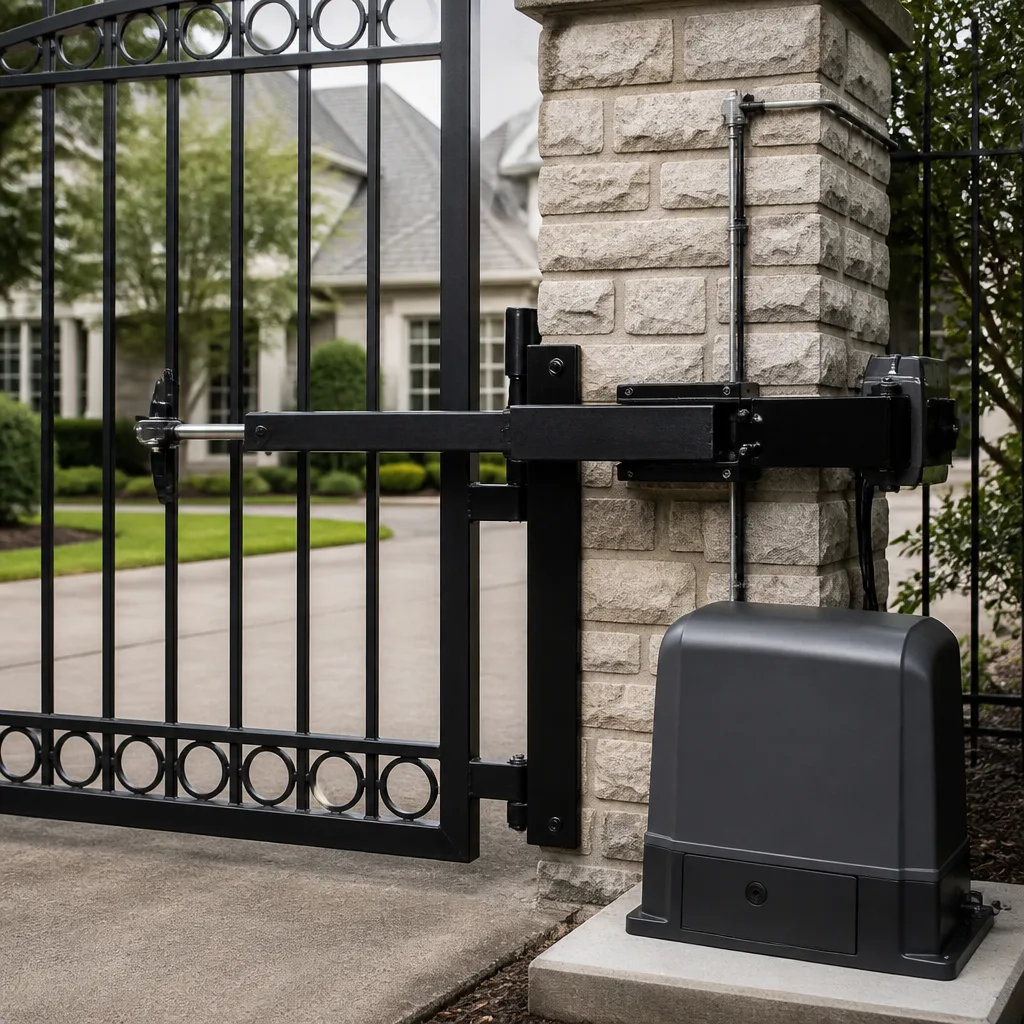
The opener is the motor and control board, plus the safety sensors, remote controls, keypad, and sometimes a vehicle loop detector cut into the driveway. Most modern openers in Kennedale are either swing-arm style for swinging gates or chain-driven slide openers for sliding gates. They run on 12-volt or 24-volt DC power, with a small transformer stepping down household voltage. They are more reliable than the openers of twenty years ago, but they are also more sensitive. A voltage spike from a summer storm, a fire ant nest in the housing, or a spider web across the sensor terminals can shut the whole system down.
Understanding this matters because it changes how you think about repair. A gate that drags on the ground is not necessarily a gate problem. It might be a hinge problem. A gate opener that hums but does not move might be a capacitor problem. Or it might be a gate so far out of balance the motor cannot start. A good technician diagnoses the system, not just the symptom.
The Most Common Gate Repairs in Kennedale
Kennedale sees the same gate failures as the rest of the Metroplex, with a few local twists. The clay-heavy soil here shifts more than the sandy soil you find east of Dallas, so post movement is a bigger factor. We also get strong spring storms with straight-line winds that catch wide gates like sails and twist the hinges. And the heat, year after year, bakes the finish off metal gates and dries out whatever lubrication was in the hinge pins. Here are the repairs we do most often in Kennedale.
1. Sagging or Dragging Gates
The main leaf of the gate drops at the latch corner and starts scraping the driveway or the gravel. This is almost always hinge wear or a post that has shifted. On steel farm-style gates you might see the top hinge stretched. On iron gates, the hinge pin itself is worn into an oval. The fix is replacing the hinges or welding reinforcement onto the hinge side, and sometimes resetting the post in new concrete. In Kennedale we see this most on older properties in the neighborhoods off Little School Road and Mansfield Cardinal Road, where gates were hung in the 1980s and 1990s and have simply been sagging for years.
2. Opener Motor Runs but Gate Doesn’t Move
You hear the motor humming or clicking, but the gate stays put. On chain-drive openers this usually means a broken chain, a seized gearbox, or a clutch that has worn smooth. On swing-arm openers, it is often a stripped gear inside the arm or a broken pin connecting the arm to the gate. The good news is that most opener repairs are parts-swap jobs that take under two hours. The bad news is that the parts are brand-specific, so whoever comes out needs to know the opener model before they load the truck.
3. Gate Opens on Its Own or Won’t Stay Closed
Phantom openings are one of the strangest calls we get in Kennedale, and usually it is not a ghost. A failing control board can trigger on its own from a voltage flicker. A keypad with a worn button can register a phantom entry. Or a remote with a stuck button inside the console of the truck sends a signal every time someone sits down. If your gate opens and closes on its own, remove the remotes from the vehicle and test for a day. If it still happens, the board or keypad is the likely culprit.
4. Gate Clunks, Grinds, or Binds Mid-Travel
Noise is diagnostic. A rhythmic clunk-clunk-clunk on a slide gate is usually a flat spot on a roller or debris packed into the track. A grinding sound on a swing gate is dry hinge pins or a wheel dragging on a warped post. A high-pitched whine from the opener is often a gear train running dry. Noise that develops gradually over months is wear. Noise that starts suddenly is usually something caught in the mechanism, or a broken part. Either way, the longer the noise continues the more damage it does, so quiet is not always good if it means the part finally failed completely.
5. Sensor and Photocell Failures
Every automatic gate installed in Kennedale after the early 1990s has safety sensors, usually photocells mounted at the gate’s open and close positions. They keep the gate from closing on a car, a trash can, or a grandchild. When a sensor misaligns, gets covered in dirt, or fails, the opener usually refuses to close except when you hold the button down. Sun glare can also trigger false readings on west-facing gates in the late afternoon. Sometimes the fix is as simple as cleaning the lens and realigning the beam. Other times the sensor itself is dead and needs replacing.
6. Keypad and Access Control Failures
Keypad repairs range from replacing a cracked housing to fully rewiring a keypad that has been hit by lightning. In Kennedale we also work on access control systems for smaller acreage properties and the occasional gated private lane. The systems are simpler than people think: a keypad, a receiver, and a relay. The failure is almost always corrosion at the connection point or a dead backup battery. A good repair is not just replacing the failed part but sealing the connections so water and ants do not get back in.
What Gate Repair Costs in Kennedale
Our prices in Kennedale are in line with the broader Fort Worth market. Gate repair is not like appliance repair with fixed national pricing. The final number depends on the gate type, the opener brand, and what actually failed. What follows are the ranges we quote most often for the Kennedale area, including parts and labor. Every price we give is quoted and agreed before any work starts. There is no hourly mystery billing.
| Repair Type | Typical Cost Range | What’s Included |
|---|---|---|
| Hinge pin or hinge replacement (single gate) | $180-$320 | Parts, labor, gate realignment |
| Slide gate roller or wheel replacement | $140-$260 | Rollers, track cleanup, adjustment |
| Opener control board replacement | $280-$450 | Board, reprogramming, sensor check |
| Keypad or keypad wiring repair | $120-$240 | Keypad or connection repair |
| Photocell sensor replacement | $110-$190 | Sensor, alignment, wiring check |
| Swing gate opener arm replacement | $320-$520 | Arm, mounting hardware, travel set |
| Full gate service and tune-up | $89 (seasonal tune-up) | Lubrication, alignment, full inspection |
These are not estimates that change after we arrive. They are the prices we give on the phone and honor on the invoice. When a repair is more involved, like a broken weld on a large estate gate or a full opener replacement, the price is quoted after we see the gate, in writing, before you approve anything. And every completed job carries our 90-Day Done Right Promise: if it is not right, we come back and make it right, no arguing, no paperwork. That guarantee applies to every repair we do in Kennedale.
What You Can Check Yourself vs. What Needs a Pro
There is a real difference between maintenance a homeowner can do safely and repairs that need a trained technician. The distinction is mostly about stored energy. A gate that weighs several hundred pounds and an opener with a chain or spring under tension can hurt you badly if something lets go while you are in the wrong position. Here is how we divide it.
Safe to Check Yourself
- Look at the gate when it is closed. Is the gap even on both sides? If the gate is wedge-shaped in the opening, a hinge or post is failing.
- Open the gate manually (use the manual release on the opener) and feel for resistance. It should move smoothly without grinding.
- Inspect the hinges and the area around the post. Rust streaks, cracked concrete, or visible movement when you push on the gate are all warning signs.
- Check the safety sensors. Are the lenses clean and facing each other? Is anything blocking the beam?
- Look for debris in a slide gate track: rocks, mud, wasp nests, acorns.
Leave to a Professional
- Any repair involving the opener’s internal gearbox, control board, or capacitor. These hold electrical charge even after unplugging.
- Any hinge repair where the post has shifted. Attempting to bend or jack a gate back into place without fixing the post puts hundreds of pounds of load on a failing part.
- Any welding work. It takes a trained welder to know the metal’s thickness, the right rod, and how to brace the gate so it does not warp from the heat.
- Anything involving the gate’s electrical connection to the house or a vehicle loop detector cut into concrete.
One of the signs of a good repair company is that they will tell you when something is simple enough to handle yourself. We have talked Kennedale homeowners through cleaning photoeyes over the phone, because the fix took sixty seconds and did not require a service call. When we say you need a technician, it is because you genuinely need one.
Gate Opener Problems and How to Think About Them
Gate opener repair is its own trade inside gate work. The opener is the motor, the control board, the limit switches, the receiver that talks to your remotes, and the safety inputs. It is the brain of the gate. Most openers installed today are made by one of the major brands: Ironworks Gate Co. home technicians are factory-trained on LiftMaster, FAAC, BFT, and Mighty Mule, among others, so the repair is done right on the first visit.
The most common opener problem we see in Kennedale is the gate stopping halfway and reversing, as if it hit something. This often points to a limit switch or a force adjustment that has drifted. A gate that has been working for years but suddenly starts reversing mid-travel is usually telling you something in its world changed: a hinge is binding, a wheel is dragging, the wind is catching the gate differently. The opener is doing its job by sensing the extra resistance and backing off. Replacing the opener would be treating the symptom.
A second common failure is the receiver not picking up the remote. This can be a dead battery in the remote, but it can also be antenna damage, a burned-out receiver board, or interference from a new device nearby. We once tracked down a gate in Kennedale that would only open from ten feet away. The new LED shop light in the garage across the street was flooding the radio frequency. Moving the opener’s antenna solved it.
Motherboard failures are the third category. If your gate stopped responding to every input at once, the remote, the keypad, the hardwired switch, and it happened shortly after a thunderstorm, the board probably took a surge. The fix is a replacement board. Surge protection is also a smart add-on for Kennedale homes, since our storm season runs from March through June and lightning strikes are common. A mounted surge protector at the opener’s power input costs a fraction of a control board and is worth doing on any new opener.
How to Choose a Gate Repair Company in Kennedale
There are plenty of general handymen who will take a crack at a gate, and we have repaired a lot of their work over the years. There are also fence companies that install gates and offer repair on the side. Neither is the same as a gate specialist. Here is what to ask when you are comparing companies.
1. Ask what brands they service.
A gate company should be able to name the openers they work on without hesitation. We service LiftMaster, FAAC, BFT, Linear, Viking, Ghost Controls, DoorKing, Elite, and Mighty Mule. If a company says “all brands,” ask them to name the last time they repaired a BFT. You will learn a lot from the pause.
2. Ask if the price is quoted before work starts.
This is the one that separates honest operators from the rest. A repair should have a price. Not an estimate, not an hourly rate with a note that “it depends.” A price, quoted before the first bolt is turned, and honored on the final invoice. If a company will not commit to a number, find one that will.
3. Ask what the warranty is, and get it in writing.
Everyone promises their work. Few write it down. Our 90-Day Done Right Promise is in writing on every job. No fine print, no exclusions, no argument. It is the same standard internal guarantee we have operated under for over 42 years, and it is not changing.
4. Ask who is coming to your house.
Our technicians are background-checked, uniformed, and held to a simple code: work in a customer’s home the way they would work in their own mother’s. Ask any company you are considering the same question. If they cannot answer clearly, that is your answer.
Common Mistakes to Avoid
- Lubricating the track to fix a dragging gate. Grease on a track collects dust and grit and turns into grinding paste. The fix for a dragging gate is finding the real cause: a hinge, a wheel, or a post. Lubricate hinge pins, not tracks.
- Ignoring a sagging gate until the opener fails. A sagging gate puts extra load on the opener every single cycle. That opener is now wearing out faster. Fix the gate before the opener gives up, and you avoid paying for both repairs.
- Replacing the battery in the remote before checking anything else. Dead batteries are common, but they are not the only reason a remote fails. If a new battery does not fix it, the receiver or the remote itself needs professional diagnosis.
- Trying to bend a sagging gate back up with a jack. We have seen homeowners do this. It usually bends the gate leaf, breaks a hinge, or both. The weight of a steel gate will win if you force it. The fix is in the hardware, not in the muscle.
- Buying a new opener for an old gate without addressing the gate’s balance. A new opener on a gate that is heavy on one side is just a new part waiting to fail. Balance the gate first, then automate it.
- Choosing the lowest bid on a welding repair. Welding is not a place to save fifty dollars. A weld that fails on a 600-pound gate is dangerous. The person who welds it should know the metal and stand behind the work.
- Wrapping the keypad in plastic to keep it dry. Condensation gets trapped inside and corrodes the contacts faster than open air would. A properly sealed keypad does not need help staying dry.
When to Call a Professional
Call a gate specialist when the gate is not opening or closing reliably, when it makes a sound it did not make last month, when it sags enough to scrape the ground, or when the safety sensors are not working. Do not wait until the gate fails completely and your car is stuck in the driveway. A gate that fails slowly is cheaper to repair than a gate that fails suddenly. If you are in Kennedale and you are not sure whether something is a real problem, call and describe it. Ironworks Gate Co. offers free estimates in Kennedale, and we will give you an honest answer even if that answer is that you do not need us yet. Call (817) 286-7391.
Frequently Asked Questions
Most gate repairs in Kennedale cost between $95 and $450, with common jobs like hinge replacement, roller repair, and keypad fixes falling between $120 and $320. The range depends on the gate type, the opener brand, and what actually failed. Call (817) 286-7391 for a quoted price on your specific repair before anyone comes out.
In most cases, yes, we can schedule and complete a common repair the same day you call, because our technicians carry parts for all nine opener brands we service. Complex jobs like full opener replacement or custom welding may take a few days to schedule. Call (817) 286-7391 and we will tell you honestly when we can be there.
A complete gate installation in Kennedale includes the gate itself, the posts set in concrete, hinges and hardware, the opener, safety sensors, a keypad or remote system, and the electrical connection. Our installations also include a full walkthrough of the system and the written 90-Day Done Right Promise. We quote the full job before any work starts.
Yes, we run the low-voltage power to the gate, install safety sensors, and make sure the system meets current safety requirements. Safety edges and photocells are not optional add-ons, they are part of a correctly installed automatic gate, and we will not install an automatic gate without working safety systems.
Intermittent gate operation in Kennedale is most often caused by a failing sensor alignment, a loose wire connection, or a control board reacting to temperature swings and moisture. The heavy clay soil here also shifts posts over time, which changes gate alignment and can cause safety sensors to trip intermittently. It is a fixable problem, and usually a quick one.
Estimates are free, and we also offer a free second opinion on any written estimate you have received from another company. That means if another gate company has quoted you a price, we will come out and tell you whether it is fair, whether it is high, or whether you need the work at all. Call (817) 286-7391 to schedule.
The Bottom Line
Your gate is a simple machine, and most of its problems have simple causes: a worn hinge, a dead sensor, a blocked track, a tired opener. The key is diagnosing the real cause the first time and repairing it in a way that holds up to Kennedale’s clay soil, summer heat, and spring storms. A gate specialist with over 42 years in the trade and factory training on nine opener brands will fix it right the first time, quote the price before starting, and stand behind the work in writing. That is the whole job. If your gate is not working the way it should, call Ironworks Gate Co. at (817) 286-7391 and tell us what it is doing. We will tell you what it needs.
Written by Victor Salinas, Owner at Ironworks Gate Co., serving Kennedale since 2013.