
Last updated August 25, 2026
Free on-site gate assessment - hinges, posts, and your LiftMaster or Nice gate operator checked before anything is quoted
The assessment is free and the quote is the invoice.

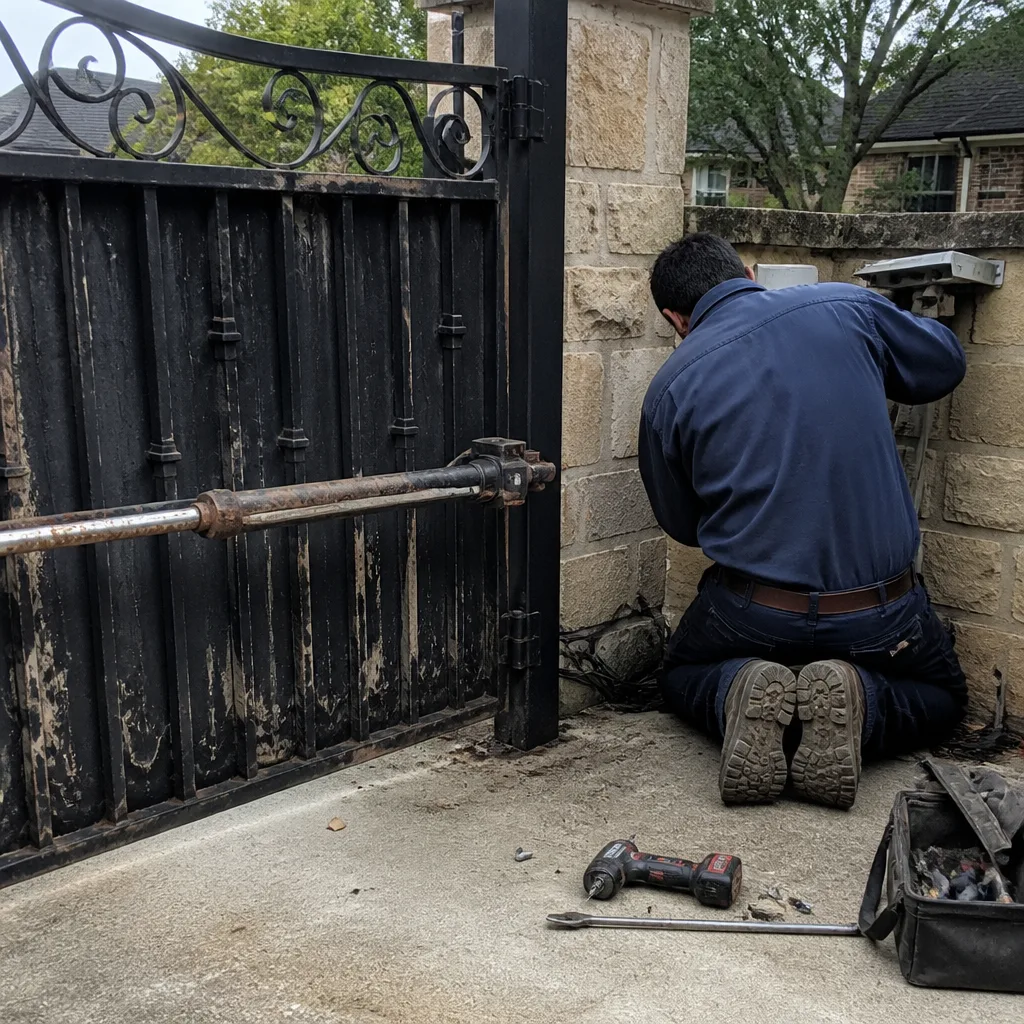 Before
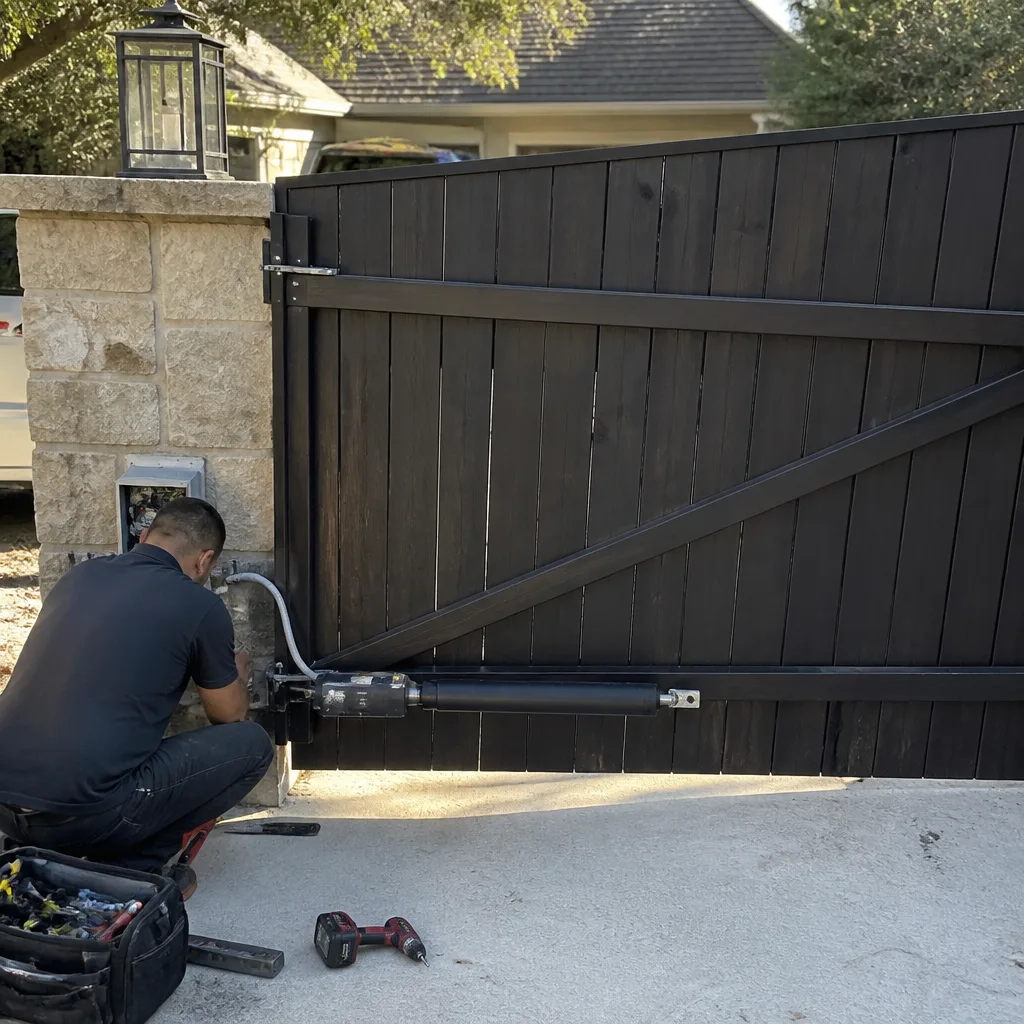 After
After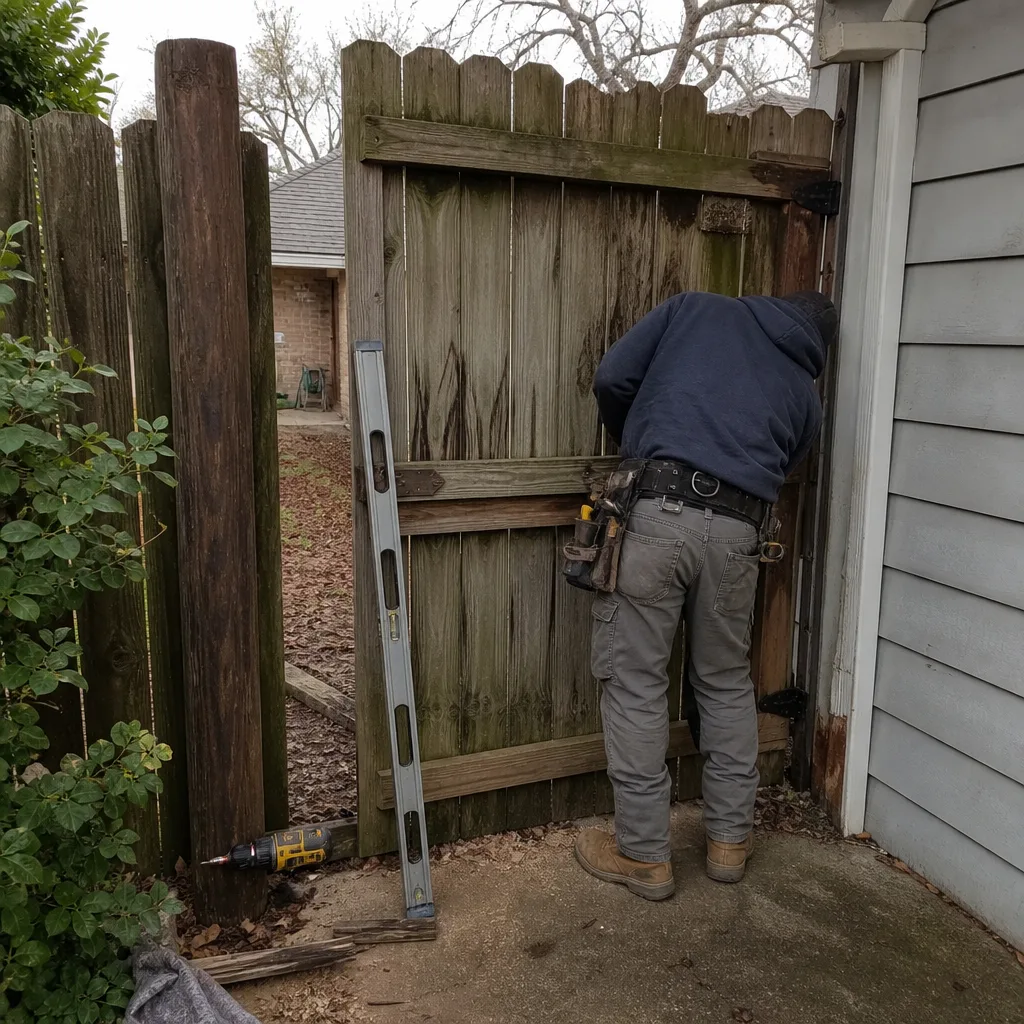 Before
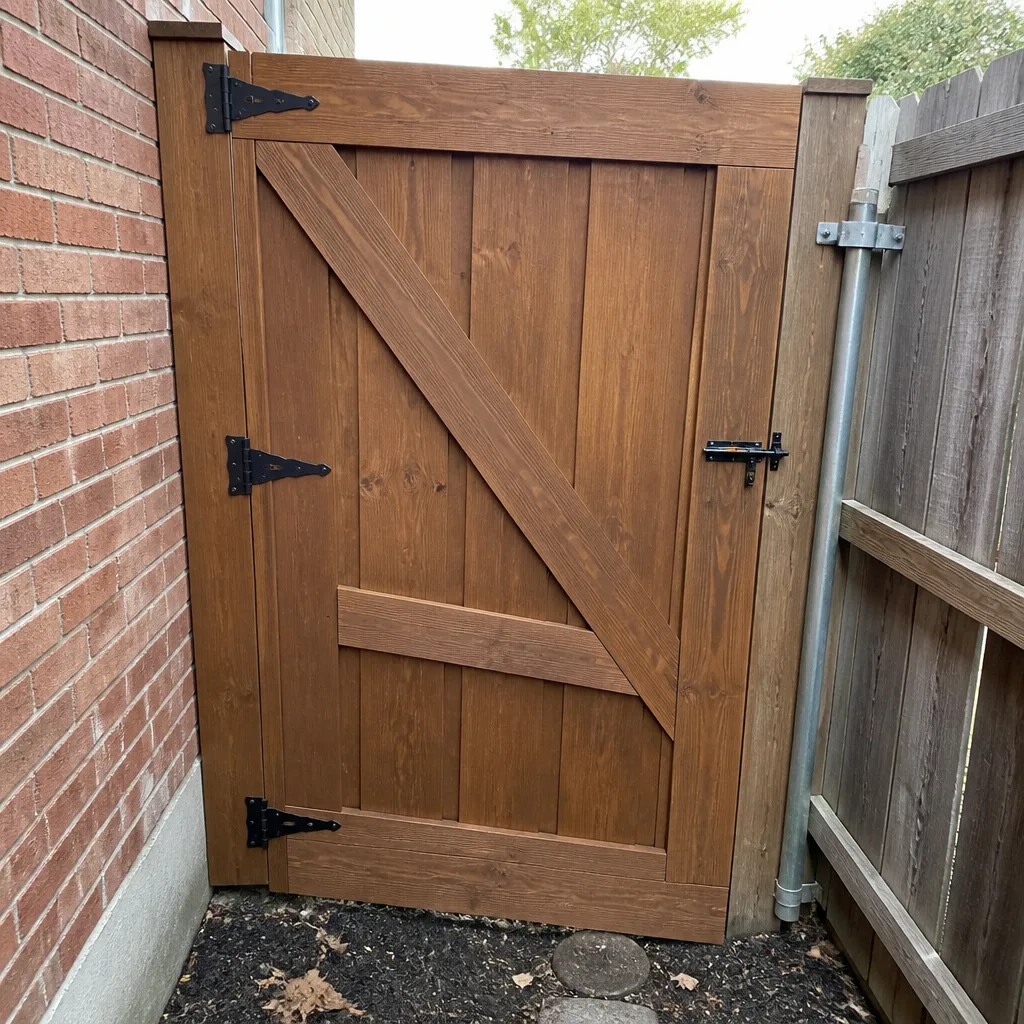 After
After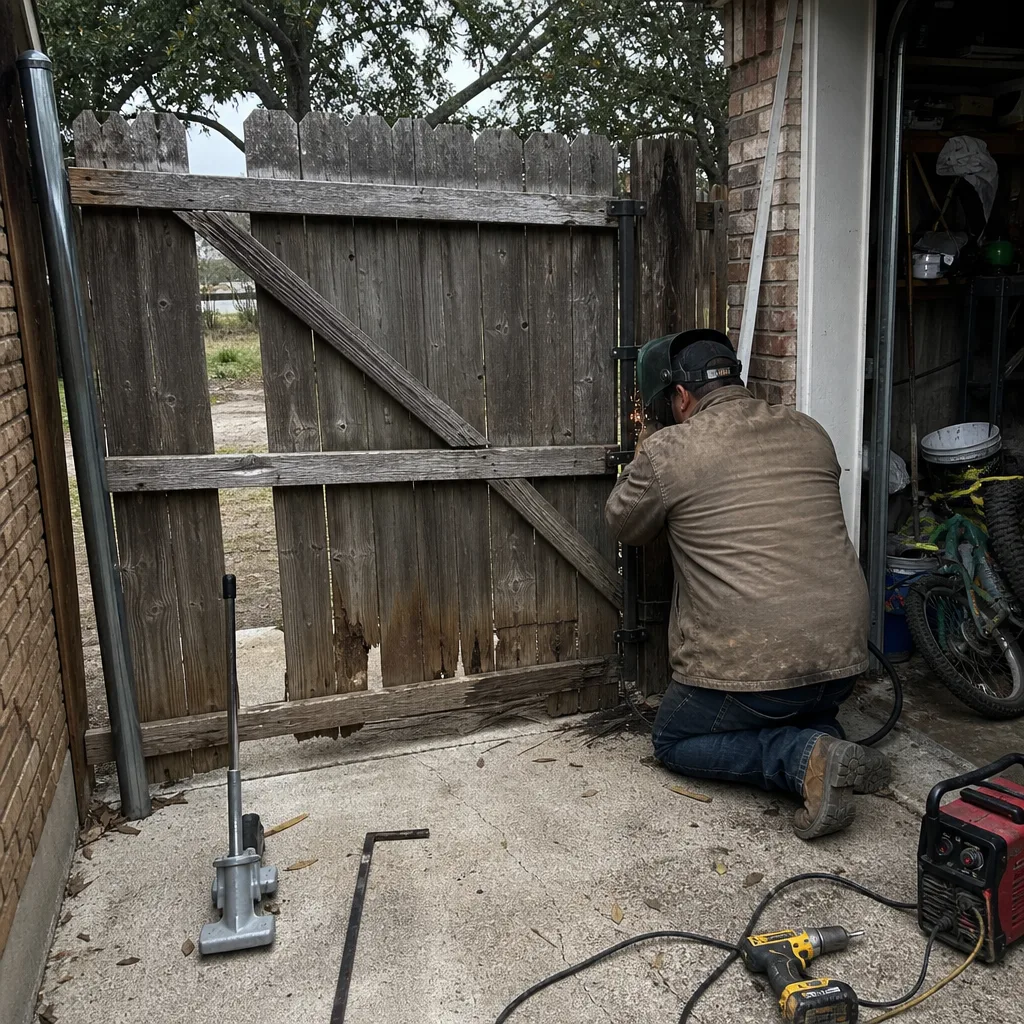 Before
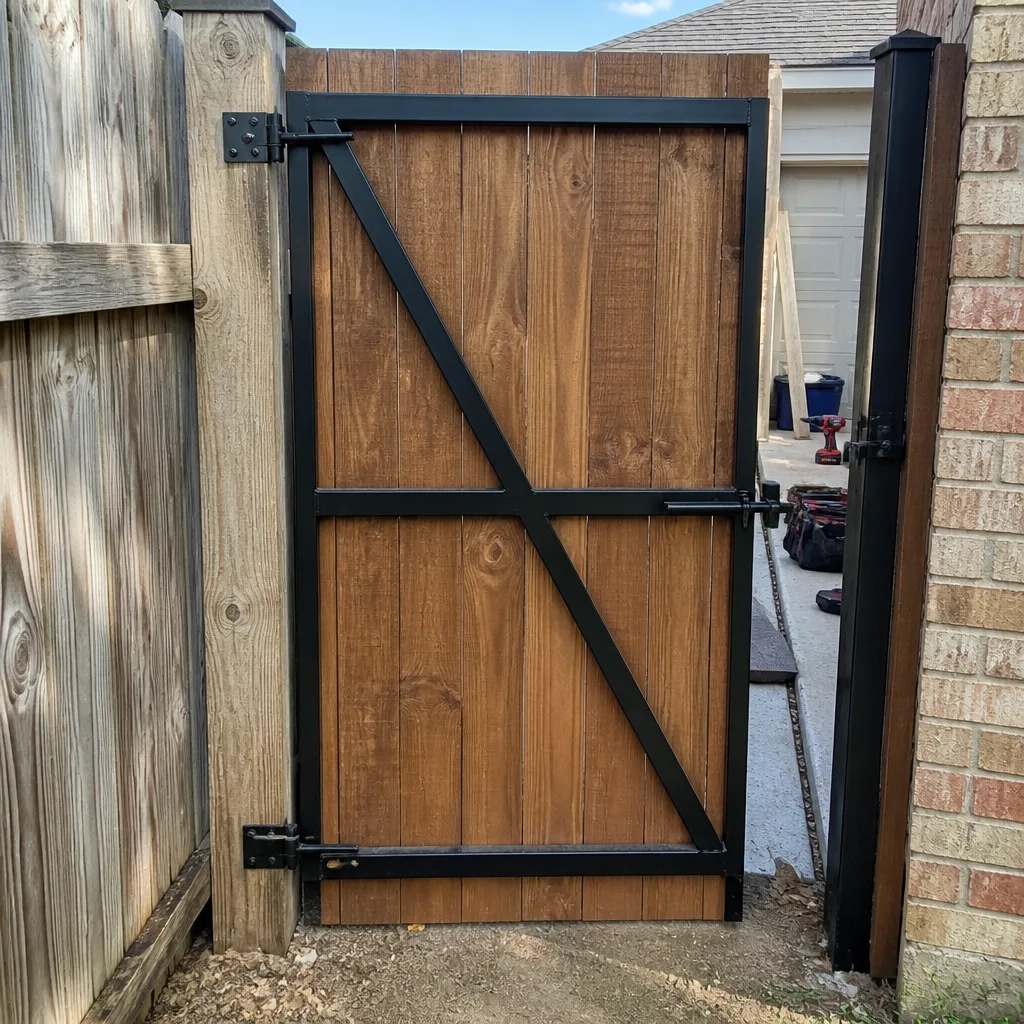 After
AfterGate Repair Permits, Codes & Inspections in TX: What You Need to Know
Most Texas homeowners don’t think about permits until the inspector is already standing in the driveway, and by then it’s usually too late. The surprising part is that gate work flies under the radar more than almost any other home improvement project, which is exactly why it causes so many problems at closing, during insurance reviews, and with city code enforcement. In Kennedale, a city that takes property standards seriously, the rules around gates are not complicated once you understand them, but they are specific, and ignoring them can turn a $400 hinge repair into a $2,000 headache. This guide walks through what actually needs a permit in Texas, which codes apply to driveway gates, how inspections work, and how to handle the gray areas without learning the hard way. Whether your gate is a simple chain-link swing on a suburban lot or an automated iron estate gate on acreage, this is the information we share with our neighbors across the Dallas-Fort Worth metro every week.
Quick Answer
In Texas, straightforward gate repairs like replacing hinges, fixing a sagging leaf, or swapping an opener motor generally do not require a permit, but new gate installations, gate posts set in concrete, and electrical work for automated openers often do, depending on your city and county. Kennedale follows the same broad Texas framework: minor repairs are typically exempt, while new construction and hardwired electrical work trigger permitting and inspection requirements. The safest path is to have a licensed contractor check your specific project before work begins, because the cost of a permit is always less than the cost of being caught without one.
Table of Contents
- Texas Permit Basics: What Actually Triggers a Gate Permit
- The Codes That Govern Driveway Gates in Texas
- Electrical Work and Gate Automation: Where Homeowners Get Caught
- HOA Rules vs. City Codes: Two Different Battles
- Inspections Explained: What an Inspector Actually Looks For
- Kennedale-Specific Considerations for Gate Work
- The Real Cost of Compliance (and Non-Compliance)
- Common Mistakes to Avoid
- When to Call a Professional
- Frequently Asked Questions
- The Bottom Line
Texas Permit Basics: What Actually Triggers a Gate Permit
Texas does not have a single statewide gate permit law. What it has is a patchwork of city ordinances, county regulations, and in some unincorporated areas, no permitting requirement at all. That patchwork is the reason two neighbors on the same street in Kennedale can have completely different experiences depending on whether their property falls inside city limits or in an extraterritorial jurisdiction.
Here is the practical breakdown of what typically requires a permit for gate work, based on the standard practices in North Texas cities including Kennedale, Arlington, Mansfield, and Fort Worth:
- New gate installation with concrete footings: Almost always requires a permit. The concrete work is structural, and the post depth and diameter are code-governed. An inspector will want to see the holes before the concrete goes in.
- Replacing an existing gate on existing posts: Usually no permit required, provided the posts are sound and the new gate is the same size or smaller. This is considered a repair, not new construction.
- Replacing or repairing hinges, wheels, or track hardware: No permit required. This is routine maintenance.
- Gate operator installation with new hardwired electrical: Permit required in most municipalities. Any new circuit run from your panel to the gate post falls under the National Electrical Code and local amendments.
- Adding a pedestrian gate where no gate existed: Typically requires a permit if new posts are being set, especially near a property line or easement.
- Gate relocation or widening a driveway opening: Permit required in nearly every city, including Kennedale, because it involves the curb cut, the right-of-way, and possibly zoning review.
The rule of thumb we tell homeowners is this: if you are digging a hole, pouring concrete, or pulling wire, check first. If you are bolting, welding, or swapping an existing component, you are probably fine. The problem is that a lot of gate work falls somewhere between those two categories, which is why a quick call to the city or to a contractor who works in Kennedale regularly is worth the five minutes.
The Codes That Govern Driveway Gates in Texas
The codes that apply to your gate depend largely on what kind of gate you have. A manual swing gate on a rural property is governed by different standards than an automated slide gate on a residential street in Kennedale. Here is what governs most residential and estate gate work in Texas:
City of Kennedale Code of Ordinances
Kennedale, like most DFW cities, adopts the International Residential Code (IRC) with local amendments. The sections most relevant to gates include Chapter 3 (building planning), which covers setback requirements for structures in front yards, and the zoning ordinance, which regulates fence and gate height, placement, and materials. In general, front-yard gates and fences in Kennedale cannot exceed 6 feet in height in most residential zones, and gates must not swing outward over a public right-of-way or sidewalk.
Kennedale also enforces property maintenance codes. A broken gate that is visibly falling apart, leaning dangerously, or obstructing access can draw a code enforcement notice even without any permit involvement. The city takes curb appeal and public safety seriously, and a gate hanging off one hinge is exactly the kind of thing a code officer notices while driving through a neighborhood.
ASTM F2200 for Automated Vehicular Gates
This is the standard most homeowners have never heard of, but it matters more than almost any other. ASTM F2200 is the national safety standard for automated vehicular gates, and while it is not a law itself, it is incorporated by reference into the Underwriters Laboratories (UL 325) standard, which in turn is enforced by local building inspectors whenever an automated gate is installed or substantially modified. In practical terms, if an inspector in Texas looks at an automated gate, they are checking it against F2200 requirements.
The standard governs entrapment protection: photo eyes or contact edges that stop and reverse the gate when a person, car, or object blocks the path. It sets requirements for gate travel speed, force limits, and warning signage. A gate that does not meet F2200 is not just a code violation; it is a liability exposure for the homeowner. If a grandchild or a neighbor’s child is injured by an older gate that lacks the required safety devices, the homeowner’s insurance may deny the claim, and the homeowner can be held personally liable.
National Electrical Code (NEC) Article 300 and 430
Any hardwired power to a gate operator has to comply with the NEC, which Texas has adopted statewide through the Texas Electrical Safety and Licensing Act. The relevant sections cover underground burial depth for direct-burial cable, conduit requirements, grounding, and GFCI protection for outdoor circuits. An inspector checking a gate operator installation in Kennedale will verify that the circuit is properly grounded, the wiring is rated for direct burial or properly run through conduit, and the disconnect is accessible.
Battery-powered and solar-powered gate operators sidestep the NEC requirements, which is part of why they have become popular for residential installations in Texas. A solar panel charging a battery in the operator box requires no hardwired electrical permit, though the operator itself still falls under UL 325 and F2200 safety requirements.
Electrical Work and Gate Automation: Where Homeowners Get Caught
If there is one area where well-meaning Texas homeowners get themselves into permit trouble, it is the electrical side of gate automation. The pattern is predictable: a homeowner buys a Mighty Mule or LiftMaster opener kit, spends a Saturday running a UF cable from the garage out to the gate post, and everything works fine for three years. Then the house goes up for sale, the buyer’s inspector flags the unpermitted electrical work, and the closing gets delayed while the seller scrambles to either retrofit and inspect the circuit or negotiate a credit.
Here is a step-by-step breakdown of what a permitted, code-compliant gate operator installation looks like in Kennedale and most surrounding cities:
- Determine power source proximity: Measure the distance from the nearest exterior outlet or sub-panel to the gate post. If the run is under 25 feet and the operator is battery-backed with a solar or trickle-charge option, you may be able to avoid hardwired electrical entirely.
- File the electrical permit: Contact the city permitting office in Kennedale (or your municipality) and file a simple electrical permit for the circuit. Cost is typically in the $50 to $150 range for a residential gate circuit, depending on the city.
- Run the wiring to code: Underground feeder cable must be buried at least 18 inches deep for PVC conduit or 24 inches for direct-burial cable, per NEC Table 300.5. The circuit must be GFCI-protected and on a dedicated breaker sized to the operator’s amperage draw.
- Call for the rough inspection: The inspector will want to see the trench open, the conduit laid, and the wiring in place before it is backfilled. This is the step most DIY installations skip, and it is the one that causes the most grief later.
- Mount and wire the operator: After rough inspection passes, mount the operator per the manufacturer instructions, connect power, and program the travel limits.
- Install entrapment protection: Photo eyes or contact edges per F2200. Test them. Test them again. This is non-negotiable.
- Final inspection: The inspector verifies the completed installation, checks the safety devices, and signs off. Close out the permit, and keep the paperwork for resale.
We have seen the alternative play out too many times. A homeowner in the hills southeast of Kennedale ran a Romex cable through a garden hose and buried it four inches deep. It worked until a heavy rain shorted it, and the resulting repair cost more than the original installation would have with a permit. The codes exist because water and electricity and moving steel are a bad combination when someone guesses.
HOA Rules vs. City Codes: Two Different Battles
Homeowners often confuse HOA rules with city codes, and the distinction matters. A city code is a law, enforced by building officials and code enforcement officers, with fines for non-compliance. An HOA covenant is a private contract, enforced through the association’s architectural review committee, with fines and legal action as remedies. You can satisfy one and completely violate the other.
In the Kennedale area, many of the established neighborhoods have active HOAs, and their gate and fence provisions are often stricter than the city’s. A city may allow a 6-foot gate in the front yard, but the HOA may cap it at 4 feet or require a specific material, color, or style. Some associations require that driveway gates match the exterior trim color of the house. Others prohibit slide gates entirely because of the track hardware, allowing only swing gates.
The practical advice is to check both layers before spending a single dollar. Here is the order of operations we recommend to homeowners across the metro, including those in Kennedale and the surrounding Tarrant County communities:
- Review your HOA covenants, conditions, and restrictions (CC&Rs) first. If you are not sure whether your neighborhood has an HOA, pull your deed or contact the county clerk’s office. Tarrant County has good online records access.
- Submit the gate project to the HOA architectural review committee if required. Many committees meet monthly, so account for that lead time.
- Check city permit requirements with the Kennedale building department or the equivalent in your city. Ask specifically about gate posts, footings, and any electrical work.
- Hire a contractor who has worked in your specific city and knows which inspector enforces what. The rules are not always applied uniformly, and local experience matters.
Skipping the HOA step is the most common mistake we see from homeowners who moved in twenty years ago and forgot they signed the CC&Rs. The association has legal authority to force removal or modification of a non-compliant gate, and that authority does not expire because you have been there a long time.
Inspections Explained: What an Inspector Actually Looks For
Gate inspections in Texas are not lengthier than they need to be, but they are specific. A residential gate inspection in Kennedale typically takes 15 to 30 minutes on site, and the inspector is checking a defined list of items. Understanding that list before you build will save you from failing an inspection, and failing an inspection costs time and a re-inspection fee.
Here is the essential checklist an inspector evaluates on a gate or fence project, based on the IRC and the common practices in North Texas municipalities:
- Footing depth and diameter: For a gate post set in concrete, the inspector will check that the hole meets the minimum depth for the frost line and wind load. In the Kennedale area, that is typically 24 to 30 inches for a standard residential gate post, but a cantilever slide gate or a heavy iron estate gate may require deeper footings.
- Concrete coverage around the post: The inspector wants to see the post fully surrounded by the proper minimum concrete envelope, usually 4 to 6 inches on all sides, to resist the lever forces a gate exerts on the post.
- Setback compliance: The gate must be located within the allowed building envelope for the property. Front-yard setbacks in Kennedale’s residential zones vary by district, which is why the permit application asks you to draw the gate’s location on a site plan.
- Right-of-way encroachment: The gate cannot swing over a public sidewalk, into a street, or across a utility easement without additional approvals. An inward-swinging gate is the standard fix.
- Electrical grounding and GFCI: For automated gates, the inspector verifies the circuit is protected and grounded, and that the outlet or disconnect is weather-rated.
- Entrapment protection: For automated gates, the inspector tests or verifies the photo eyes, contact edges, or both function correctly and are mounted at the right heights.
- Warning signage: F2200-compliant gates require specific warning placards on both sides of the gate. Walk-through pedestrian gates adjacent to automated vehicular gates must have their own signage.
Inspectors are not adversarial. They are checking boxes on a checklist, and most of them appreciate a homeowner or contractor who has done the work properly the first time. A clean inspection is a matter of preparation, not luck.
Kennedale-Specific Considerations for Gate Work
Kennedale sits in a curious position within the Dallas-Fort Worth metro, part small town, part suburb, with a mix of older ranch-style homes on large lots and newer developments on tighter parcels. That mix creates a wider range of gate projects than you might find in a uniform master-planned community, and the code landscape reflects it.
The soil in Kennedale and much of Tarrant County is the first thing contractors account for. The area sits on the Eagle Ford Shale formation, which means clay-heavy soils that expand when wet and contract when dry. That movement, more than any other factor, is the reason gate posts in Kennedale shift, lean, and crack concrete over time. A post set in proper footing depth handles the movement. A post set at 18 inches does not. This is why the footing requirements in the code are not arbitrary, and why a cheap installation that skimps on concrete depth in this area will fail within five to seven years.
The climate also plays a role. Kennedale has hot summers, periodic heavy spring storms, and the occasional winter ice event, all of which stress gate hardware and automation differently. Over the long term, the freeze-thaw cycle in the clay soil exacerbates post movement, while the intense July and August heat shortens the life of plastic components in gate operators. Galvanized and powder-coated steel holds up better than raw iron, and stainless hardware resists the corrosion that builds up from the humidity and occasional flooding in low-lying areas near Village Creek.
For homeowner compliance, the City of Kennedale maintains a permitting office that handles fence and gate permits, and the staff are generally easy to work with. The city has adopted the International Codes, and the inspection approach in Kennedale is pragmatic: they want to see that the work is done safely and to code, not to make the process harder than it needs to be. If you have questions, calling the building department before you start is free, and the person on the phone will tell you straight whether your project needs a permit or not.
Neighborhoods to note for gate work in Kennedale include the established streets east of New Hope Road, the acreage properties along Mansfield Cardinal Road, and the newer subdivisions west of Little School Road. Each has different setback and driveway configurations, which means the permit and footprint requirements can vary even within the same city.
The Real Cost of Compliance (and Non-Compliance)
Here are the realistic numbers for gate permitting in Kennedale and comparable North Texas cities, based on the work we have performed across the metro over the last several years:
| Item | Typical Cost Range |
|---|---|
| Residential fence/gate permit (no electrical) | $50 - $150 |
| Electrical permit for gate operator circuit | $50 - $150 |
| Plan review fee (if required) | $25 - $75 |
| Re-inspection fee (after a failed inspection) | $50 - $100 |
| Code enforcement citation for unpermitted work | $250 - $2,000 (first offense) |
| Teardown and rebuild of non-compliant footing or electrical | $500 - $3,000 |
| Typical full gate replacement (simple manual swing, standard size) | $1,800 - $4,500 |
| Automated gate operator installation (operator and labor, no electrical upgrade) | $1,200 - $3,500 |
The math is straightforward. A permit costs somewhere between $50 and $300 for a typical gate project. Being caught without one, whether during a resale inspection, an insurance claim, or a code enforcement drive-by, costs four to fifteen times that amount once you factor in fines, teardowns, and rework. Compliance is not an expensive bureaucratic indulgence. It is the cheapest part of the job.
What many homeowners in Kennedale do not realize is that the city cross-references permit records during the sale process. Title companies and buyer’s inspectors routinely pull the permit history on a property, and improvements that should have been permitted but were not become closing-time problems. A $75 permit you skipped in 2019 can become a $1,500 repair escrow holdback in 2026.
Common Mistakes to Avoid
- Assuming all gate work is exempt: The belief that “it’s just a gate” leads homeowners to skip the permit conversation entirely. While repairs are often exempt, new construction and electrical work frequently are not, and the city offices in Tarrant County have seen every version of the excuse.
- Skipping the HOA review in a hurry to get the work done: If the HOA has an architectural review requirement and you skip it, you can be forced to remove a perfectly good gate at your own expense. The HOA does not care that the city approved it.
- Setting posts too shallow in the clay soil: Kennedale’s expanding clay soil will push shallow posts out of true within a few years. The footing depth is not a suggestion; in this soil it is the difference between a gate that works in ten years and one that drags on the ground.
- Running electrical without protection: Burying interior Romex without conduit or using an extension cord as permanent power are both fire and electrocution hazards, and both are red flags for inspectors. Use UF cable in conduit at the proper depth, and GFCI-protect the circuit.
- Ignoring entrapment protection on automated gates: A gate that can crush a child or a pet is a serious liability. The photo eyes and contact edges required by F2200 are not optional accessories; they are the safety standard, and insurance companies know it.
- Doing the work first and seeking permission later: The “ask forgiveness” approach fails in permitting because the inspector can require you to expose footings or trench work that is already buried and backfilled. That means digging everything up. Checking first is always cheaper.
- Oversizing the gate for the posts: A heavy steel gate hung on posts sized for a light aluminum gate will sag and fail, regardless of whether the permit was pulled correctly. The engineering has to match the material.
When to Call a Professional
Some gate work is genuinely DIY-friendly: tightening hinge bolts, lubricating the track, replacing a keypad battery. But the moment the job involves concrete footings, hardwired electrical, an automated opener, or a gate heavy enough to injure someone if it fails, the risk profile changes. A falling gate is a serious hazard, and a poorly wired gate operator is a shock or fire risk. If your project involves setting new posts, running power, or installing an operator with entrapment protection, hire a licensed contractor who pulls the permit and handles the inspections. The cost of professional installation is mostly about not having to learn the hard way. At Ironworks Gate Co. home, we handle gate work end to end, and we have been doing it in the Kennedale area long enough to know which inspector wants what and how to get a project through the first time. If you are considering a gate project, call (817) 286-7391 for a free estimate, and we will walk you through what your specific project needs.
Frequently Asked Questions
Replacing an existing gate on existing posts generally does not require a permit in Texas, including in Kennedale, as long as the new gate is the same size and the posts are structurally sound. If you are replacing the posts or changing the gate’s footprint, pull a permit first, because the concrete footings will need to be inspected.
A residential fence or gate permit in Kennedale typically costs between $50 and $150, and an electrical permit for a gate operator circuit runs in the same range. The exact fee depends on the project valuation and current city fee schedule, so call the building department for a precise number on your specific project. For a free estimate on the full project, call us at (817) 286-7391.
In most Texas cities including Kennedale, you can install a solar-powered or battery-powered gate opener without an electrical permit, but the opener itself must still comply with UL 325 and ASTM F2200 safety standards. If you are running hardwired power from your panel to the gate, an electrical permit is required for the circuit, and the installation must pass inspection.
Unpermitted gate work is often discovered during the buyer’s inspection or title review, and it can delay closing, trigger a repair escrow holdback, or in some cases force the seller to bring the work up to code before the sale closes. A $100 permit is far cheaper than the closing-table complications of unpermitted work.
No, routine gate repairs like replacing hinges, wheels, track hardware, or opener remotes do not require a permit in Kennedale. These are considered maintenance, not construction, as long as you are not modifying the structure or the electrical system. If the repair scope grows into replacing posts or rewiring, recheck the requirements.
ASTM F2200 is the safety standard for automated vehicular gates, and it applies to any motorized gate installed in Texas, regardless of whether a permit was required for the mechanical work. The standard governs entrapment protection devices like photo eyes and contact edges, gate speed and force limits, and required warning signage, and inspectors enforce it on new installations and major modifications.
The Bottom Line
Texas gate permitting is not a maze; it is a short list of situations where the rules apply and a longer list where they do not. Repairs are usually exempt. New construction with concrete footings usually is not. Electrical work for automation has its own permit path. The codes, from the IRC to the NEC to ASTM F2200, exist to keep gates from falling on people and wiring from starting fires, and an inspector’s checklist is predictable enough to pass on the first try with the right preparation. In Kennedale, where the clay soil, the HOA layer, and the city’s property standards all intersect, the cheapest and fastest path is to check first, pull the permit when it is needed, and hire someone who knows the local process. Do that, and your gate will be the kind of improvement that adds value instead of a closing table liability.
Written by Victor Salinas, Owner at Ironworks Gate Co., serving Kennedale since 2013.