
Last updated August 25, 2026
Free on-site gate assessment - hinges, posts, and your LiftMaster or Nice gate operator checked before anything is quoted
The assessment is free and the quote is the invoice.


 Before
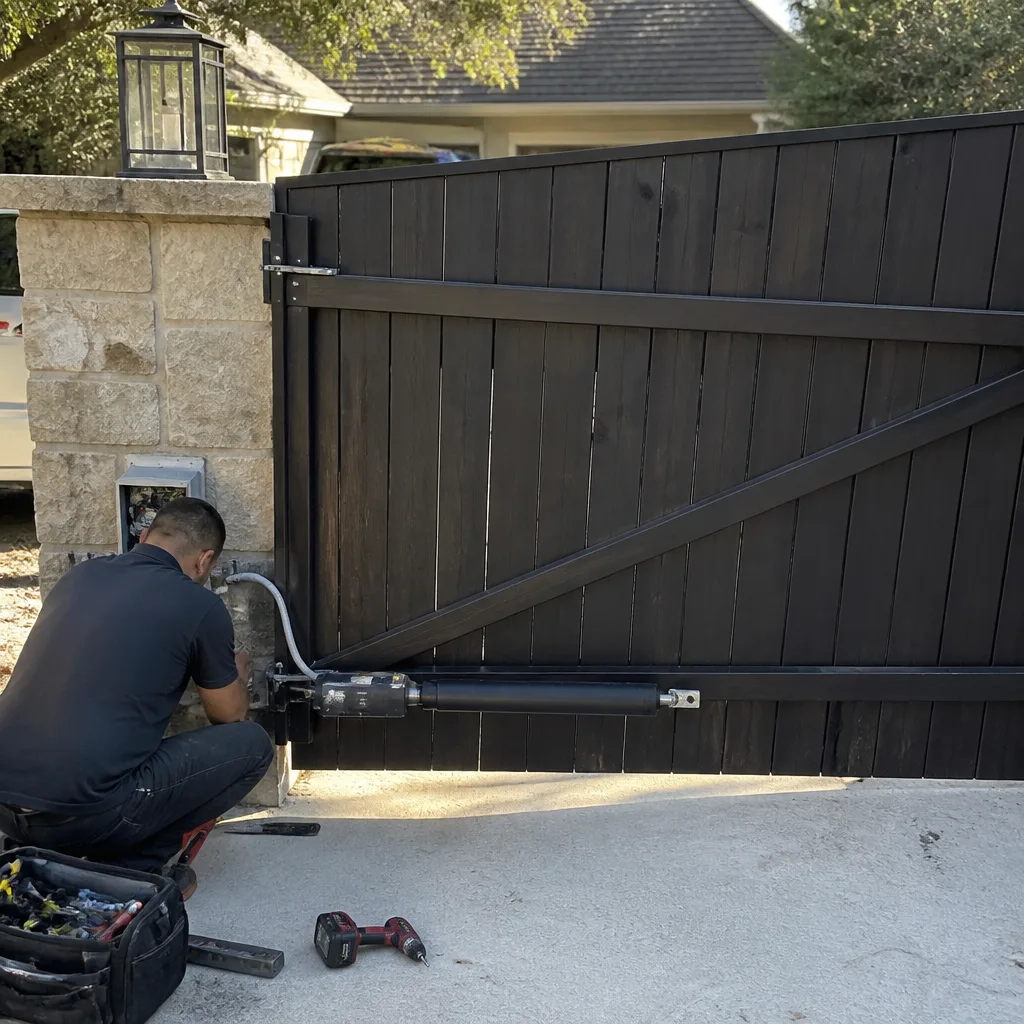 After
After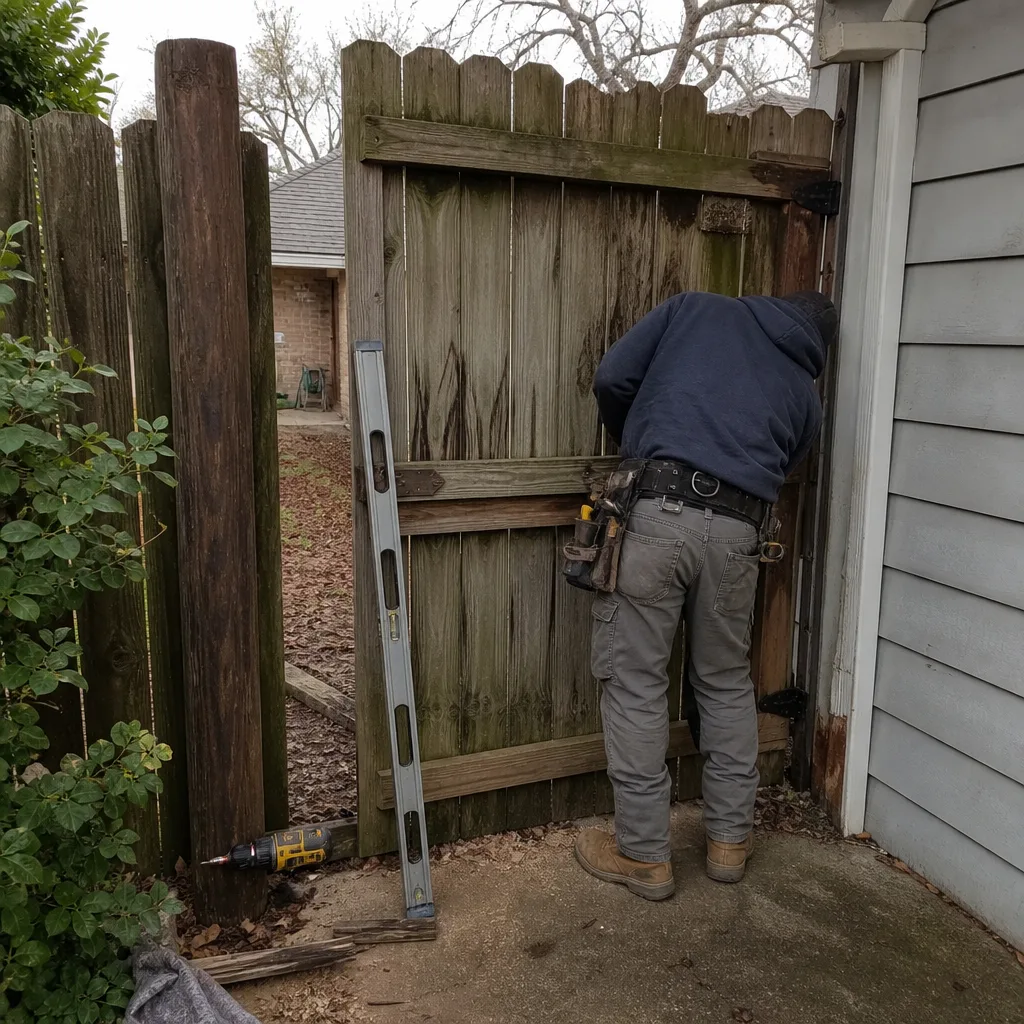 Before
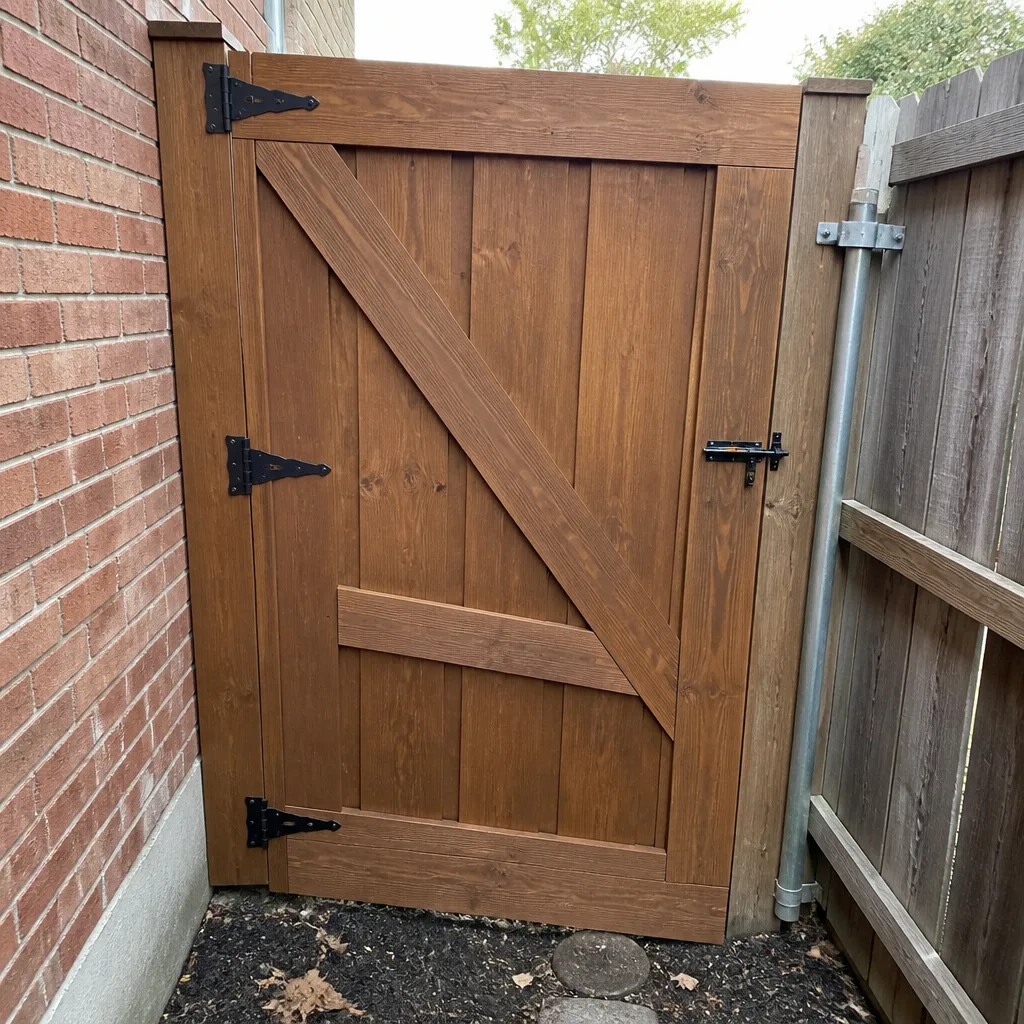 After
After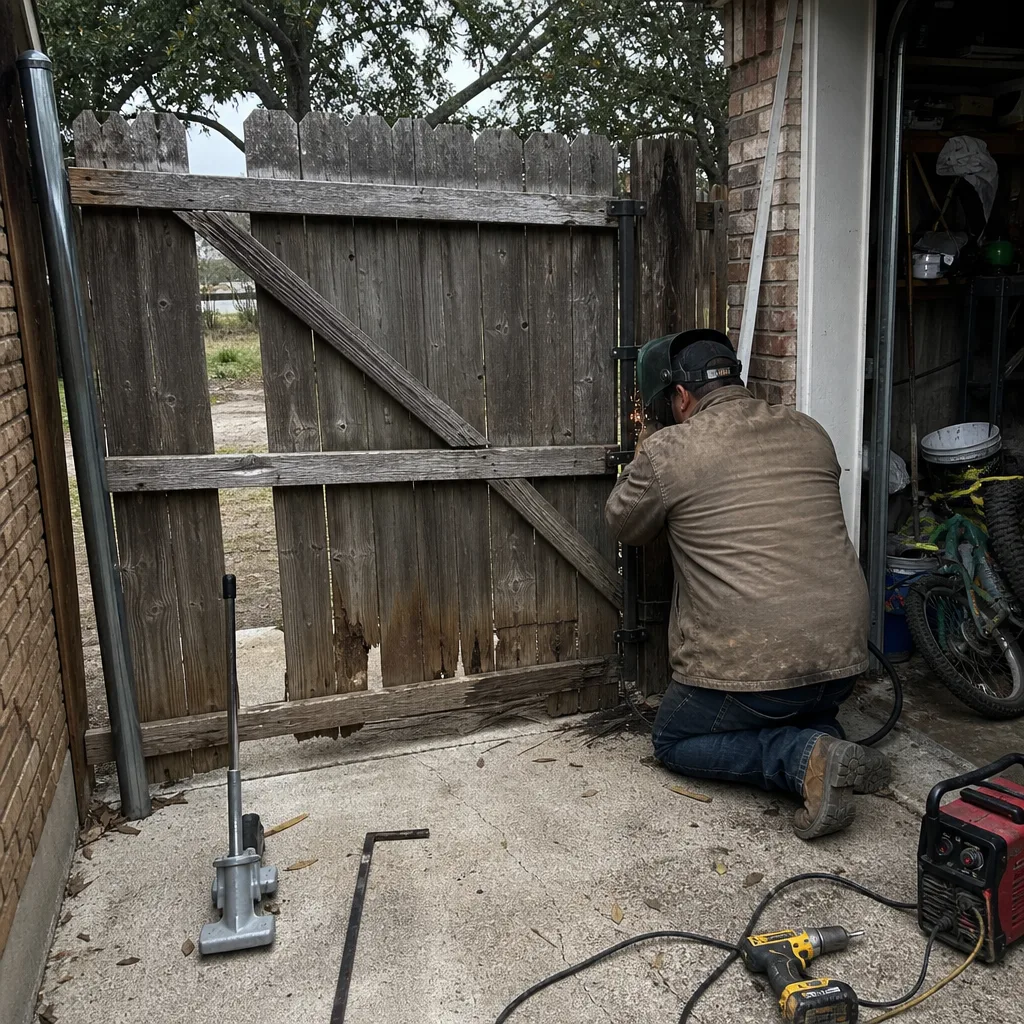 Before
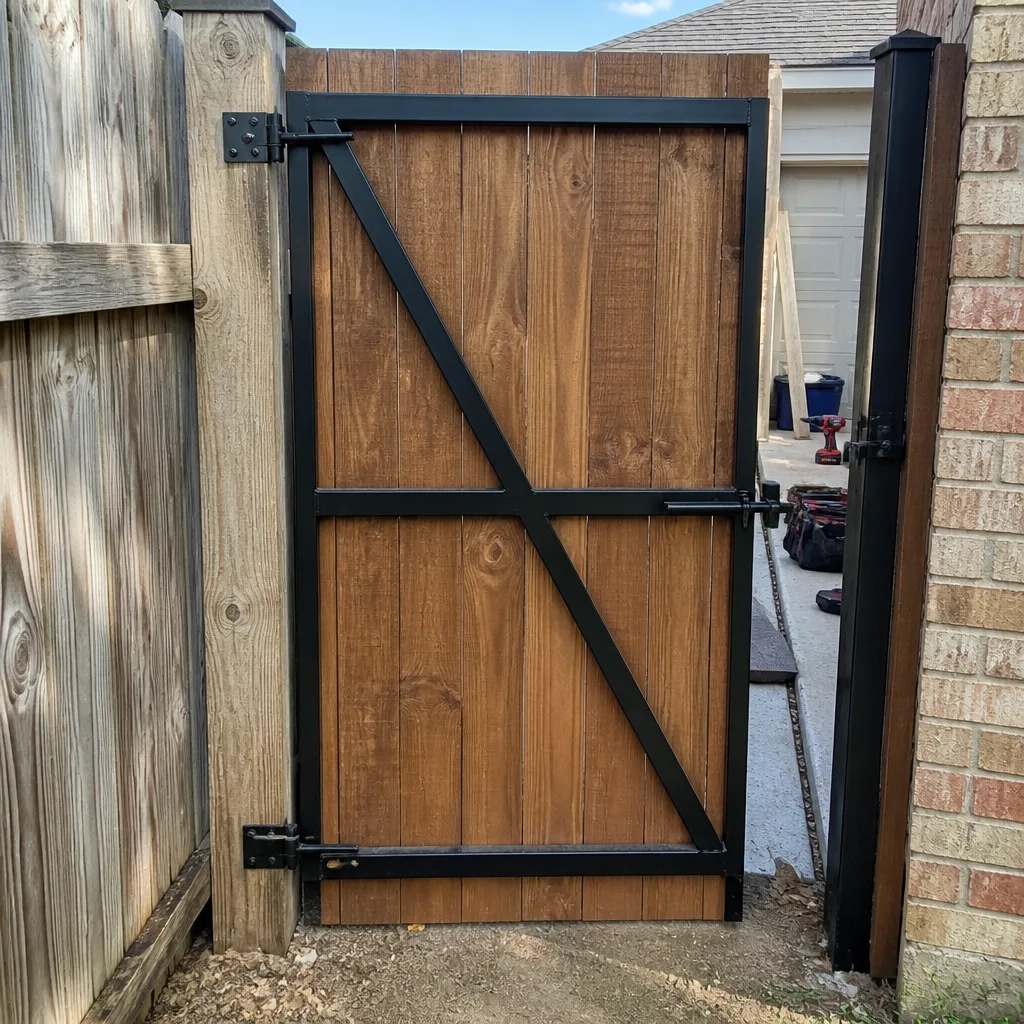 After
AfterSeasonal Gate Repair Care for Kennedale: Year-Round Homeowner’s Guide
Most Kennedale homeowners don’t think about their driveway gate until the morning it refuses to open. That’s the expensive way to own a gate. A gate that gets a little seasonal attention costs far less to run over twenty years than one that gets ignored until it fails. This guide walks through what your gate needs in each season here in Kennedale, what you can handle yourself, and what genuinely calls for a trained technician. We’ll cover the weather patterns that age gates fastest in this part of Tarrant County, the simple checks that prevent most breakdowns, and the seasonal service schedule that keeps a gate running the way it did on day one.
Quick Answer
Seasonal gate care in Kennedale means a spring check on hinges and opener force settings after winter storms, a summer focus on heat effects and battery health, a fall prep for leaf debris and alignment, and a winter check on cold-weather operation and sensor function. Most homeowners benefit from one professional tune-up in spring, one in fall, and a five-minute visual check each month in between. That simple rhythm prevents roughly 80 percent of the breakdowns we see in Kennedale driveways.
Table of Contents
- Why Kennedale Weather Is Hard on Gates
- Spring Gate Care Checklist
- Summer Gate Maintenance: Heat, Batteries, and Cycle Duty
- Fall Gate Preparation for Kennedale Homeowners
- Winter Gate Service: Cold Starts, Sensors, and Wind Load
- The Monthly Five-Minute Gate Check
- Parts That Wear and When to Replace Them
- Common Mistakes to Avoid
- When to Call a Professional
- Frequently Asked Questions
- The Bottom Line
Why Kennedale Weather Is Hard on Gates
Kennedale sits in a part of Texas where a gate experiences a little bit of everything. Summer heat that bakes metal past 140 degrees on the surface. Spring thunderstorms with wind gusts strong enough to shove a panel gate off its track. Fall weeks where oak leaves and cedar needles pile into every track, hinge, and sensor path. And a handful of winter mornings each year where temperatures dip below freezing and a gate motor that worked fine in July suddenly strains against cold-thickened grease. Few climates in the country test a driveway gate across this many conditions in a single calendar year.
The heat is the quiet killer. A gate opener mounted in direct sun on a south-facing Kennedale driveway can reach internal temperatures that degrade circuit boards over just a few summers. We’ve pulled openers from Kennedale homes where the plastic housing had turned chalky and brittle from ultraviolet exposure alone. Batteries in solar-assisted openers cook in the same heat and lose capacity well before their printed lifespan. The cold is less frequent but sharper: a single hard freeze is often when a hinge that has been binding slightly for nine months finally refuses to move at all.
What Kennedale homeowners should take from this is simple. A gate is not a refrigerator. You cannot plug it in and forget about it for a decade. A gate is a moving mechanical system of steel, electronics, and a motor, sitting outside in Texas weather every day of the year. Seasonal attention is the difference between a gate that runs twenty years and a gate that fails in seven.
Spring Gate Care Checklist
Spring in Kennedale comes with March and April winds that carry dust, pollen, and fine grit into every moving part on a driveway gate. This is the season for the most thorough cleaning and adjustment of the year. The work centers on undoing what winter and early spring weather did to the gate’s moving parts.
- Clean the gate track or driveway surface. For sliding gates, sweep the track clean of gravel, twigs, and winter debris. For swing gates, clear the arc where the gate travels. A single pebble in a sliding gate track can cause the safety sensor to fault and stop the gate mid-cycle. In Kennedale, construction gravel from nearby roads ends up in gate tracks more than you’d think.
- Inspect and lubricate all hinges. Swing gate hinges take thousands of load cycles per year. A dry hinge grinds slowly and wears the pin. Use a light penetrating oil or white lithium grease, not heavy axle grease which traps grit and turns into grinding paste.
- Check opener force settings. After a winter of cold starts and possible storm impacts, verify that the opener moves the gate smoothly without surging or stalling. If the gate hesitates or reverses without touching anything, the force setting likely needs adjustment after weather-related resistance changes.
- Test the auto-reverse and photo-eye sensors. Place a solid object in the gate’s path and confirm it reverses. Clean the photo-eye lenses with a dry cloth. Spring pollen coats those lenses and causes phantom faults.
- Inspect welds and bolt tightness. Walk the full length of the gate frame and look at every weld joint and bolt. Texas wind loads flex a gate in ways that slowly loosen hardware. Tightening a bolt in March prevents a snapped hinge in August.
We’ve seen Kennedale gates where the only problem was eighteen months of dust built up on a photo-eye sensor. The homeowner nearly bought a new opener. Five minutes with a rag would have solved it. That’s the spirit of spring maintenance: solve the small things before they become the expensive things.
This is also the right season for the Ironworks Gate Co. home $89 Seasonal Tune-Up. A technician performs a full 21-point inspection, recalibrates opener force and limit settings, lubricates all moving parts, and catches problems while they’re still cheap to fix. For a gate that has skipped a year of maintenance, spring is the time to make the appointment.
Summer Gate Maintenance: Heat, Batteries, and Cycle Duty
Kennedale summers test gate openers harder than any other season. Days in the high 90s and low 100s are routine, and a gate opener mounted on a metal post in direct sun absorbs that heat all afternoon. The most common summer failures involve three things: overheating circuit boards, dead or dying backup batteries, and motors that trip thermal overload protection right when you need to leave for work.
Battery care deserves more attention than it gets. Most gate opener systems, including models from LiftMaster, FAAC, and BFT, include a backup battery. That battery lives in an enclosure that bakes in the summer sun. Heat shortens battery life by half or more. A battery that would last five years in a mild climate may last two and a half in Kennedale.
Here is what summer care looks like in practice:
- Check battery status monthly from June through September. Most openers have a battery indicator LED or a diagnostic mode. A battery showing anything less than full charge in summer should be load-tested soon.
- Listen for sluggish movement on hot afternoons. Heat increases electrical resistance in the motor windings. A gate that opens slower at 4 p.m. than it does at 8 a.m. tells you the motor is working against heat load. That’s a sign to check the opener.
- Keep the opener housing shaded if possible. Even a small sunshade mounted above the opener housing reduces internal temperature dramatically. Make sure ventilation openings stay clear of dust and spider nests.
- Avoid excessive cycling. If you have a gate that opens for every delivery truck, landscaper, and family visit, summer is when the duty cycle adds up. Motor thermal overload protection exists to prevent burnout, but each trip teaches the motor to run hotter. Standard residential openers are not built for continuous commercial-style cycling.
One pattern we see in Kennedale every July and August: a homeowner replaces a gate opener battery in May, then calls us in August because the gate died again. The problem was never the battery alone. The problem was the charging circuit cooking the new battery under summer heat, or an opener that was so heat-stressed that it drew the battery down faster than the charger could restore it. A professional evaluation looks at the entire electrical path, not just the part that failed last.
If you have a Mighty Mule or FAAC opener that is more than five years old and has never had a heat-related service, budget for a capacitor or transformer check before next summer. Those components age faster in North Texas than anywhere in the country.
Fall Gate Preparation for Kennedale Homeowners
Fall in Kennedale is the season of leaf litter, acorns, and the first cold snaps. The work here is preparation: clear debris that accumulates, tighten anything that summer heat expanded, and verify that the gate will operate reliably when temperatures drop. Fall is also the most common season for gate installer schedules to fill up, as homeowners realize before the holidays that their gate has been limping along since spring.
- Clear leaves and acorns from tracks, hinge areas, and sensor paths. Wet leaves pack down into a sliding track and harden like paper mache. Acorns wedge under swing gates and lift them off their pivot points. This is one of the most common causes of fall gate misalignment we see in Kennedale.
- Check all bolts and brackets that summer heat may have loosened. Thermal expansion and contraction works hardware loose over a single season. A 30-minute bolt-check on a bracket in October prevents a dropped gate in December.
- Test the gate before the first predicted freeze. Run it through a full open-close cycle and listen for strain, chirping, or grinding. Anything that sounds wrong in October will sound worse at 28 degrees in January.
- Verify that weather seals and covers are intact. If your opener enclosure has a cracked housing or a missing gasket, fall is the time to replace it before winter rain finds its way inside. Water intrusion plus a cold snap is a guaranteed circuit board failure.
- Schedule fall service if the gate is due. A fall tune-up addresses everything above in one visit and leaves the gate ready for whatever winter brings.
Kennedale sees some of its strongest sustained winds in October and November. Those winds carry dust and fine soil from the open ground around town into gate mechanisms. A fall cleaning removes that grit before it works its way into bearings and bushings and accelerates wear through the winter months.
Winter Gate Service: Cold Starts, Sensors, and Wind Load
Winter in Kennedale is mild compared to the Panhandle, but it still includes a handful of freeze events and some serious wind. The winter service concerns are specific: cold-thickened lubricant making the motor work harder, contraction of metal parts causing slight misalignment, and wind gusts exposing weak points in hinges and brackets that nobody noticed when the weather was warm.
Cold starts. A gate opener motor draws more current when the temperature drops, because the grease in the gearbox thickens and creates resistance. Older openers with undersized transformers may fail to deliver enough starting current on a cold morning. The gate will hum, stall, or trip a breaker. Those symptoms often disappear by noon when the sun warms everything up. That is still a problem. A gate should not be temperature-dependent.
Photo-eye sensors in winter. Low sun angles in December and January can blind a photo-eye sensor, making the gate refuse to close. If your gate only misbehaves in the late afternoon on clear winter days, angle adjustment on the sensors may be the fix. Frost and condensation on lenses also cause faults in winter. Clean lenses monthly through the cold season.
Wind load on swing gates. A wide swing gate acts like a sail. In a 30 mph winter front, the wind pushes against the gate and transfers that load directly to the hinges and the opener arm. Hinges with hairline cracks fail on the first windy day after a freeze weakens the steel. Checking hinge integrity in November is vastly cheaper than replacing a dropped gate in February.
Snow is rare in Kennedale, but freezing rain happens. Ice on the gate itself adds weight that the opener is not rated for. If the gate is frozen in place, do not force it. Let it thaw. The opener’s internal clutch will slip to protect the motor, but repeated forcing wears the clutch and shortens motor life.
The Monthly Five-Minute Gate Check
Between seasonal service appointments, a short monthly inspection catches developing problems. The entire check takes five minutes and requires no tools. This is the single highest-value habit in this guide. Kennedale homeowners who do this monthly check catch hinge wear, sensor faults, and track debris before those issues become service calls.
- Run the gate through one full open and close cycle. Watch and listen. Note any new sound, any hesitation, any jerk or stutter in movement.
- Look at the hinges. Check for rust streaks, movement at the mount points, or visible wear at the pivot. A hinge that moves when the gate moves has a problem at the mount.
- Sweep the track or clear the swing arc. Remove anything within a foot of the gate’s travel path either direction.
- Check the photo-eye lenses. Quick dry wipe. Five seconds.
- Look at the opener enclosure. Is the cover seated? Any new cracks? Any moisture inside the housing? Signs of ants or wasps nesting?
- Test manual release. If your opener has a manual release, operate it once a month to confirm the gate will open by hand in a power outage. A manual release that hasn’t been used in years may be seized exactly when you need it most.
Write down anything unusual and compare month to month. A noise that gets slightly louder each month is far more useful information than a noise described for the first time when the gate has already stopped working.
Parts That Wear and When to Replace Them
Every gate has parts designed to be replaced. Knowing the typical service life of each helps Kennedale homeowners plan budget, avoid surprise failures, and recognize when a repair quote is fair. These are averages based on North Texas conditions and normal residential use.
- Gate hinges: 8-12 years on a properly installed swing gate. After that, pin wear and metal fatigue start to compound. Powder-coated hinges may still bind even if they look fine on the outside.
- Gate opener battery: 2-5 years in Kennedale’s heat. Check annually after year two.
- Photo-eye sensors: 5-8 years. They fail from lens clouding, wiring degradation, or internal component aging. A sensor that intermittently fails is failing.
- Opener circuit boards: 6-10 years. Heat is the primary shortening factor. Boards on south-facing installations trend toward the shorter end.
- Drive belts and chains: 5-7 years. A loose or cracked belt will eventually slip and leave the gate half-open.
- Wheels and rollers on sliding gates: 7-10 years. Flat spots or wobble mean replacement time. Worn rollers put extra load on the motor and shorten its life.
- Keypad housings and faces: 3-6 years in full sun. UV light fades the buttons and eventually cracks the housing, letting water into the circuit board.
None of these are failures of craftsmanship. They are wear items, like brake pads or tires. The difference between a gate that lasts decades and one that costs thousands in recurring repairs is whether worn parts get replaced at first signs of wear or after they cause a cascade failure that takes the motor and brackets with them. We service all major brands including Mighty Mule, LiftMaster, FAAC, and BFT, so whatever opener sits on your driveway, the parts that wear will be available when replacement time comes.
Common Mistakes to Avoid
- Ignoring a small noise for months. A squeak or grind is a parts wear indicator. The threshold for repair doesn’t rise because you waited; the cost does. We have replaced $80 hinge pins on Kennedale gates where the homeowner waited a year and ended up with a $900 hinge mount repair.
- Lubricating with whatever is in the garage. WD-40 is a solvent, not a lubricant. It drives out moisture but leaves moving parts dry. Heavy axle grease attracts grit. Use purpose-made gate lubricant or a light lithium grease.
- Adjusting opener force settings to compensate for a mechanical problem. If the gate binds and the fix you choose is cranking up the opener force, the gate will eventually tear something expensive. A gate should move easily by hand with the opener disengaged. If it doesn’t, fix the gate before adjusting the motor.
- Forgetting the manual release. Power outages happen in Kennedale during summer storms and winter ice events. Seized manual releases get discovered during the outage, which means the gate stays closed and the car stays in the driveway. Test the release monthly.
- Treating the gate as a “set it and forget it” appliance. North Texas weather does not allow that. The gate sits outside through 100-degree summers, freeze cycles, and storm-force winds every year. Seasonal attention is required maintenance.
- Charging the battery, then ignoring the charger. A failing charger destroys new batteries as fast as it destroyed the old one. If a gate battery died young, test the charging circuit before installing a replacement.
- Putting off fall service until Thanksgiving week. The busiest time for gate service in Kennedale is the two weeks before Thanksgiving through New Year’s. Companies book out. If the gate fails then, you’ll wait. October service avoids the crunch.
When to Call a Professional
Some gate problems are genuinely dangerous and should not be touched by a homeowner. Any work involving torsion springs, gate frames under tension, or high-tension cables carries the risk of a spring or cable releasing under stored energy and causing serious injury. If the gate drops, binds under load, or shows cracked welds at critical joints, step back and call a professional. The same applies to any electrical work inside the opener housing: capacitors retain charge even with power disconnected, and a short across the wrong terminals can cause a burn or fire. Gate motors and access control boards are not amateurs’ work.
Other situations call for a professional because specialized equipment or expertise is required: opener fault codes that need diagnostic access, gate frame welding, gearbox or arm replacement, solar system troubleshooting, and any intercom or access control programming. If your LiftMaster, FAAC, or BFT opener shows an error you can’t identify from the manual, guessing is the most expensive option.
Ironworks Gate Co. offers free estimates in Kennedale. Call (817) 286-7391 and Victor will walk through the symptoms with you and give you an honest take on whether it needs a service visit or something you can handle yourself.
Frequently Asked Questions
A driveway gate in Kennedale should have a professional tune-up twice a year, once in spring and once in fall. Between service visits, a monthly five-minute visual and operational check catches most developing problems. The $89 Seasonal Tune-Up from Ironworks Gate Co. covers the full spring or fall service and includes a 21-point inspection. Call (817) 286-7391 to schedule.
Gate repair pricing in Kennedale varies widely by the part and the failure mode. Small repairs like hinge pin replacement or sensor cleaning start around $100-200. Opener board replacement, motor repair, or hinge mount welding typically runs $400-900 depending on the system. Ironworks Gate Co. gives upfront pricing before any work starts and offers $50 off any repair over $250. Call (817) 286-7391 for a free estimate.
Yes, for gate emergencies in Kennedale, Ironworks Gate Co. offers same-day service when the gate is stuck open, stuck closed, or unsafe. A live person answers the phone 24 hours a day, 7 days a week, so you can describe the problem immediately and get scheduled without waiting for a callback. Call (817) 286-7391.
Leaving a gate open for days at a time in Kennedale exposes your home and property to anyone who drives up. If the gate can be manually closed and locked, that’s the safer temporary state. If the gate is stuck open and cannot be secured, that constitutes an emergency and Ironworks Gate Co. will prioritize the visit. Call (817) 286-7391 and a live person will help.
Solar gate openers work in Kennedale and are common on rural and semi-rural properties, but they require more attention than line-powered openers. The batteries and panels degrade faster in North Texas heat, so they need annual battery testing and panel cleaning. During stretches of cloudy winter weather, solar systems can fall below needed charge levels. A solar gate opener that has become unreliable often benefits from a battery and panel health evaluation, which Ironworks Gate Co. includes in seasonal service.
The $89 Seasonal Tune-Up from Ironworks Gate Co. is a full 21-point inspection and adjustment service: cleaning and lubricating all moving parts, recalibrating opener force and limit settings, testing safety sensors and auto-reverse, checking battery health, tightening all mounting hardware, and inspecting welds and hinges for early wear. It’s available year-round in Kennedale. Call (817) 286-7391 to book.
The Bottom Line
A driveway gate in Kennedale lives outside through everything Texas weather can deliver: triple-digit heat, spring storms, fall wind, and winter freezes. Seasonal care is not optional if you want the gate to outlast the weather. Spring and fall tune-ups, a five-minute monthly check, and prompt attention to new noises will keep a gate running reliably for decades. When the gate needs a professional, Ironworks Gate Co. has been doing this work for over 42 years, with certified service across nine opener brands, upfront pricing, and the 90-Day Done Right Promise on every job. Call (817) 286-7391 for a free estimate in Kennedale, and we will be there when we say we will.
Written by Victor Salinas, Owner at Ironworks Gate Co., serving Kennedale since 2013.