
Free on-site gate assessment - hinges, posts, and your LiftMaster or Nice gate operator checked before anything is quoted
The assessment is free and the quote is the invoice.
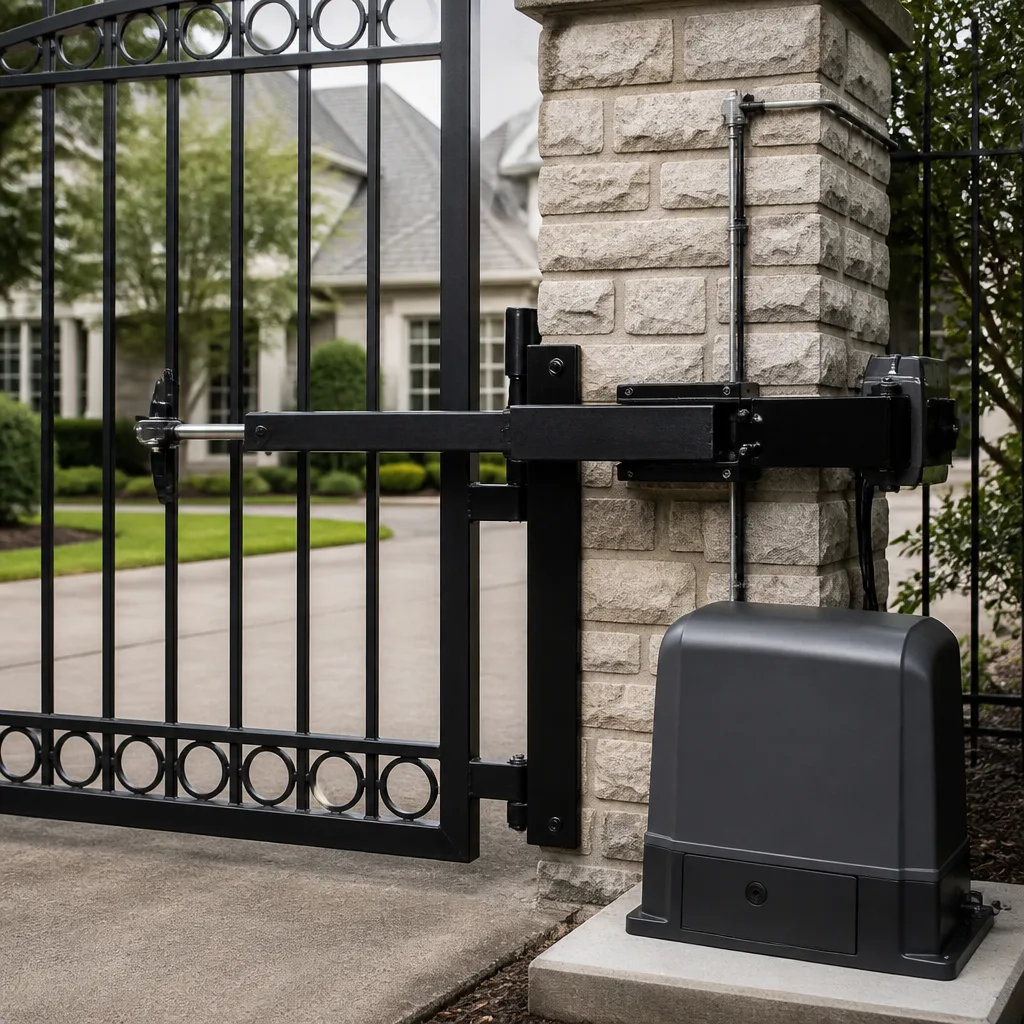
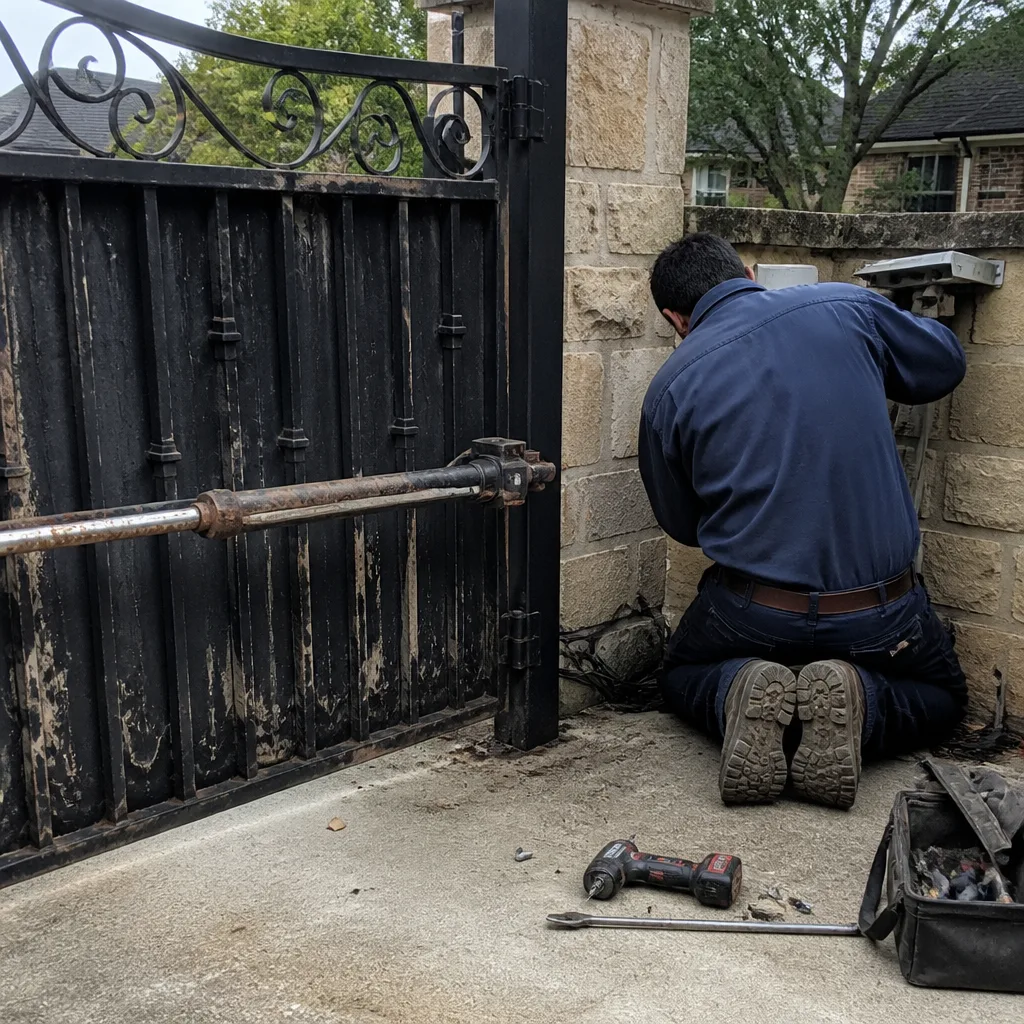 Before
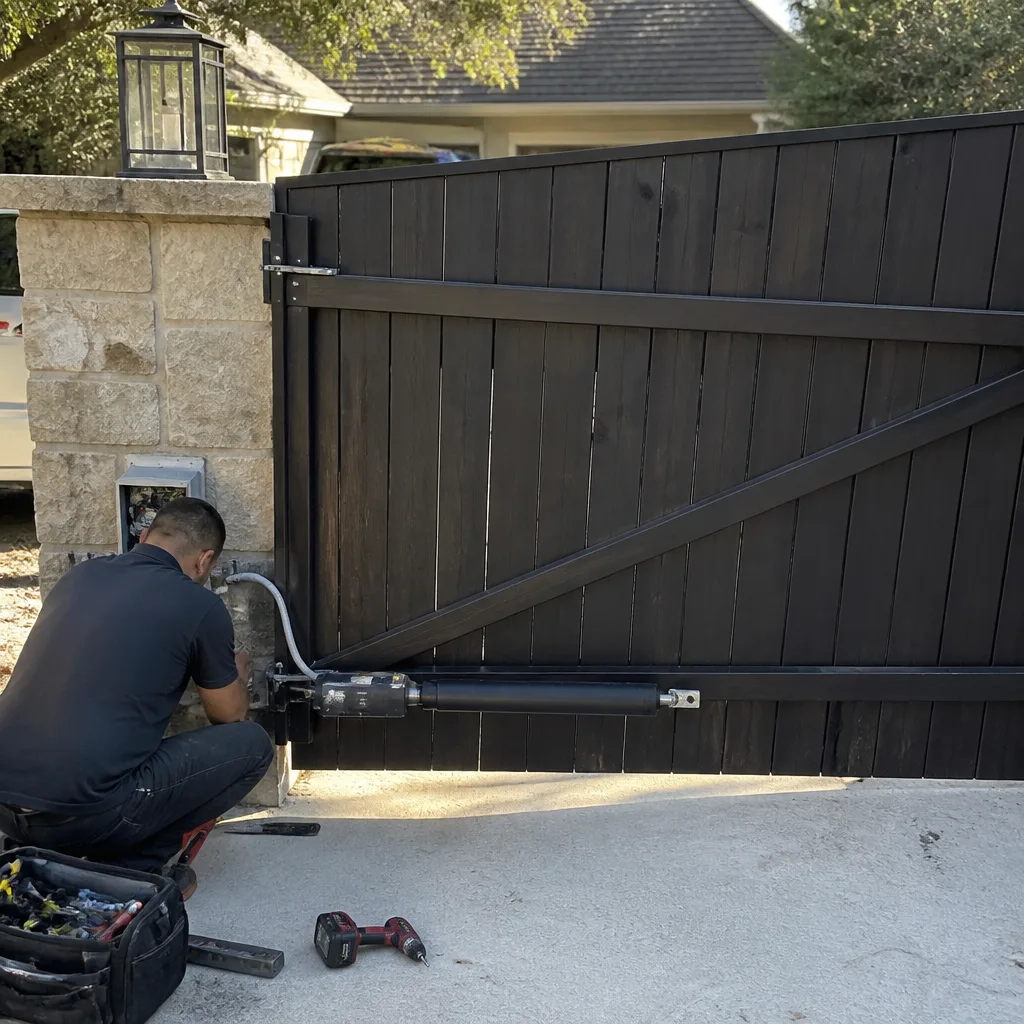 After
After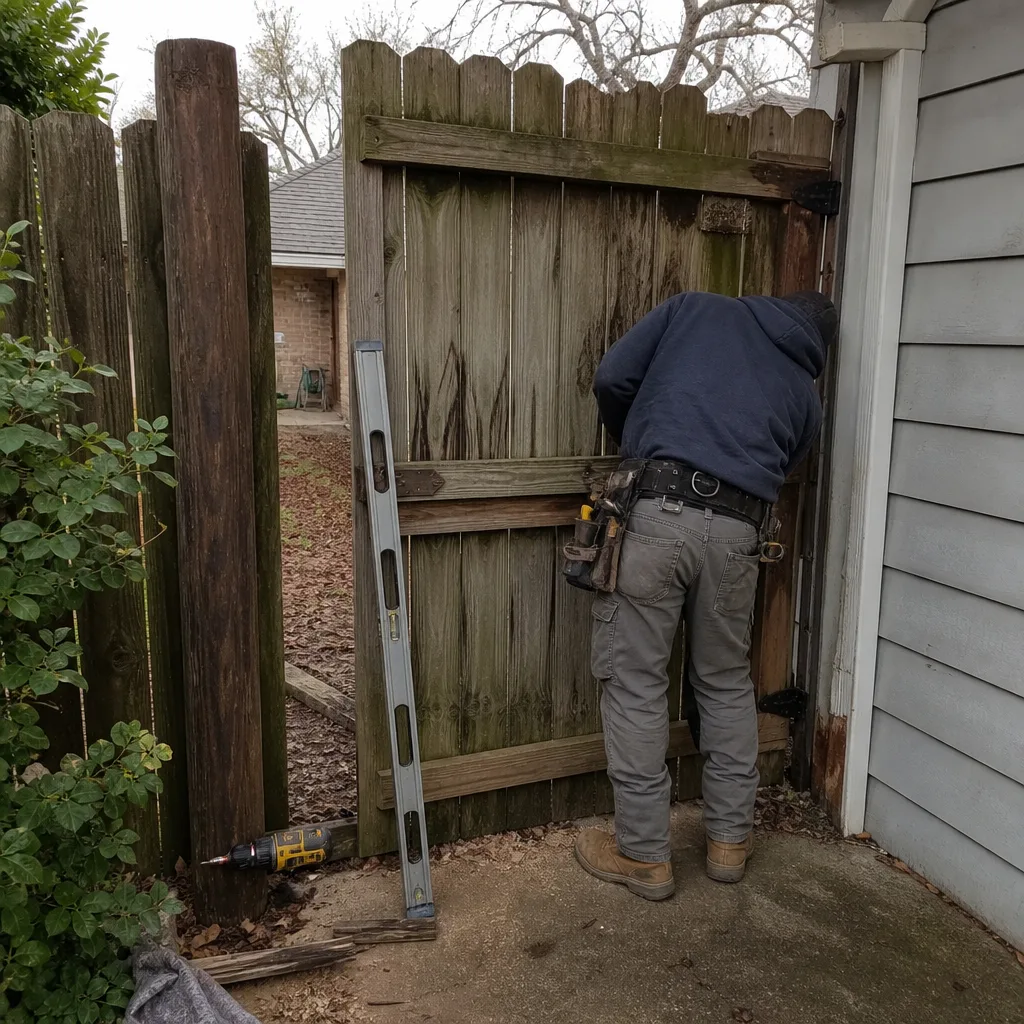 Before
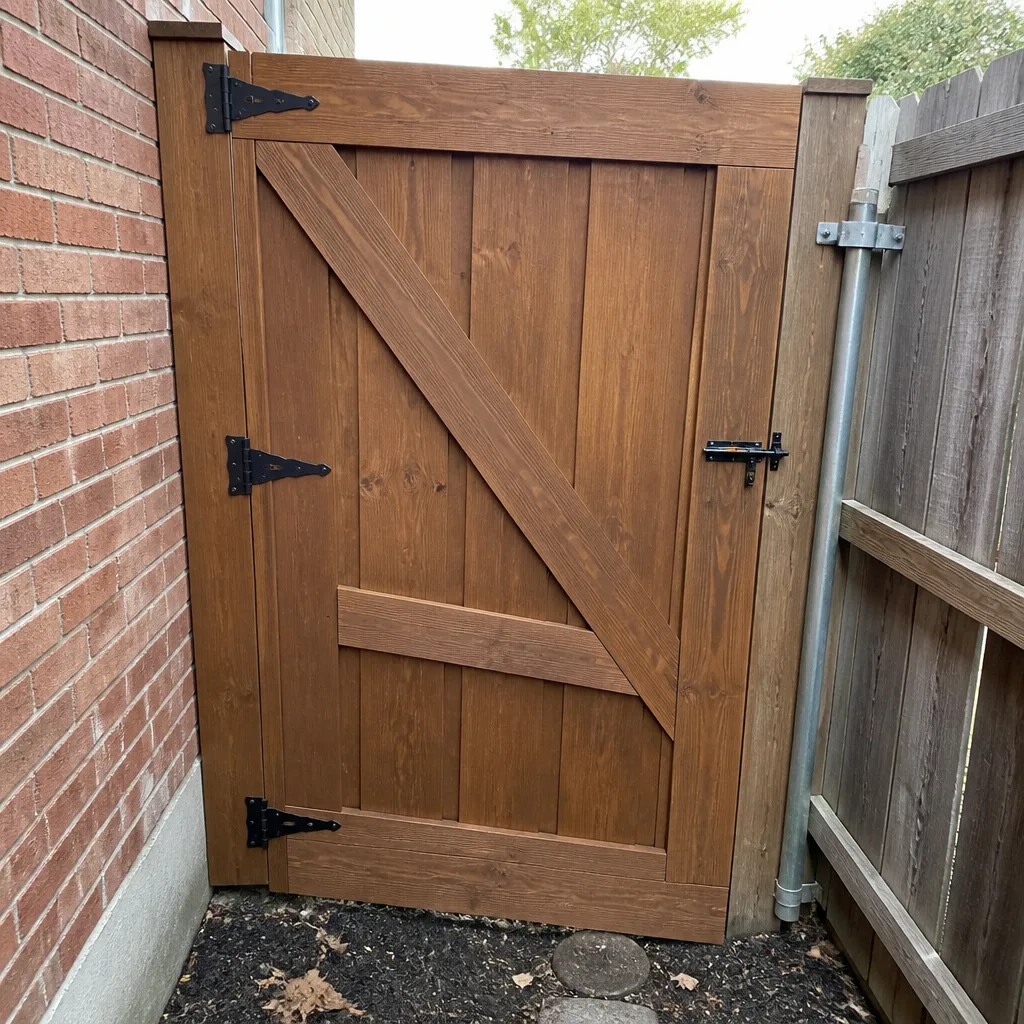 After
After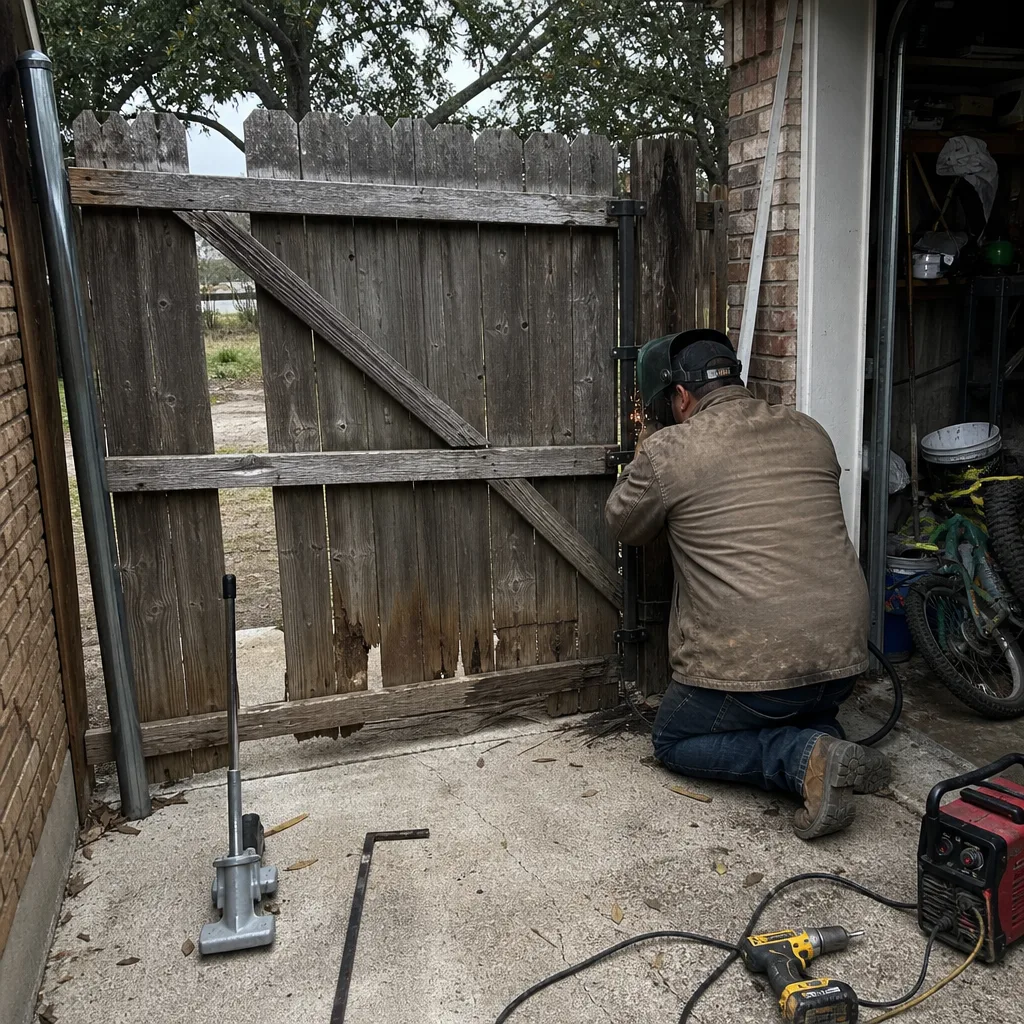 Before
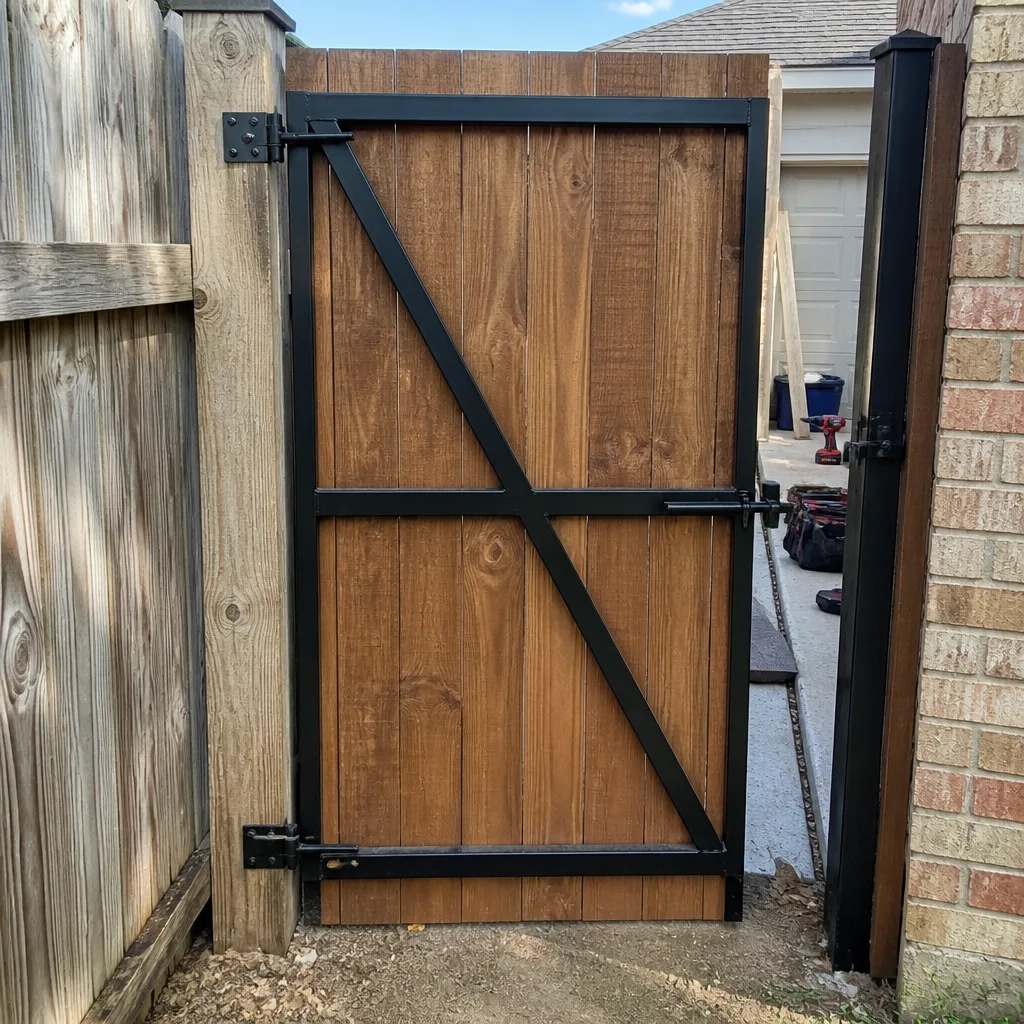 After
AfterLinear Access Control Installation: The Kennedale Owner’s Guide
Linear access control installation in Kennedale typically runs $450 to $1,400 installed, depending on whether we’re replacing a failed keypad or wiring a complete telephone entry system with a new controller. We stock Linear and Linear-compatible parts on our trucks, and we can usually have your gate back up same day when it’s a straightforward swap. Most owners discover the problem the hard way: the gate works fine from a clicker but won’t respond to the keypad, or it opens for everyone because the controller stopped recognizing codes.
- Most common call: keypad dead or intermittent, gate ignores valid codes
- Typical installed price range: $450-$1,400 in Kennedale
- What we stock: Linear keypads, receivers, controllers, and power supplies
- Turnaround: same-day or next-day on most keypad and receiver swaps
- Price is set before work starts. Written, agreed, no surprises.
Which Linear Models This Applies To
We install and service access control across the Linear product lines most common in Kennedale driveways: the LRA and LRAK keypad families, the AP series remote controls, the M3 and M5 series receivers, and the AE and AM series gate operators with integrated controllers. The big compatibility gotcha we see is with older Linear systems running the 318 MHz frequency versus newer multi-code 318/433 MHz units. If you have a keypad from before 2012, it may not handshake with a newer receiver without a bridging module, and that’s the kind of thing that sends a homeowner to three different online parts stores before they call us.
On the OEM versus aftermarket question for Linear specifically: for keypads, we lean toward the Linear OEM part. The aftermarket equivalents work in most cases, but we’ve seen weatherproofing failures on the cheaper units within two Texas summers. The gaskets crack, the faceplate fades, and the membrane buttons get spongy. For receivers and power transformers, a quality aftermarket unit rated for the same amperage is often fine, and we’ll tell you when it’s a reasonable way to save money. What we will not do is put a part on your gate that we wouldn’t put on our own mother’s driveway.
The Linear Difference in a Hot Climate
Kennedale sees the full Texas swing: 100-degree Julys, hard freezes in February, and a dust that works into every seam. Linear access control boards are solid, but the two parts that fail first here are the keypad buttons and the outdoor wiring terminals. The button failure is a UV and heat story: the membrane starts breaking down after six to eight years of direct afternoon sun, and codes that worked for years suddenly take three tries. The wiring terminals corrode because moisture gets into the enclosure when the gasket wears flat. We see it on the east-facing keypads most often, the ones that catch rain and morning sun. A $12 gasket replaces in ten minutes and saves a $300 board replacement. That’s the kind of thing we check every time we open an access control box, whether you asked us to or not.
Signs Your Linear Access Control Installation Is Failing
- Codes work intermittently, especially after rain. This usually points to a failing keypad membrane or compromised enclosure seal letting moisture reach the board. It’s not going to fix itself, and it will strand you outside one evening. This is the most common failure we see across the Arlington border and up through Sublett Road.
- Remote works but keypad doesn’t, or vice versa. The controller is receiving from one input but not the other, which points to the keypad’s transmitter or the controller channel wiring rather than the opener itself. We isolate which side failed before quoting the fix.
- Gate opens without any valid code entered. This is a controller board failure or a short in the keypad wiring, and it means your gate is serving as an open invitation. Turn the keypad off at the breaker or run it in manual until we get there, because a gate that opens for everyone is worse than a gate that opens for no one.
- You hear clicking but nothing happens, or the keypad is fully dark. A dark keypad is usually a power supply or transformer failure. The click-without-action is the controller trying to send a signal the opener isn’t receiving. Both are standard repairs we handle same-day in most cases.
- The keypad works but the gate operator behaves erratically. This is often programming drift inside the controller, not a mechanical gate problem. The access control and the opener have fallen out of sync, and the fix is re-pairing plus a firmware reset where the board supports it.
Replacement Cost & What’s Included
In Kennedale, a Linear access control installation breaks down like this: standalone keypad replacement runs $450 to $850 installed including the part; receiver-only replacement is typically $325 to $600; and a full controller-plus-keypad-plus-receiver job lands from $900 to $1,400 depending on wire condition and whether we’re adding a battery backup or second keypad. You’ll know the number before we unbolt anything, because we quote the job, you approve it, and that’s the price. No additional labor surprise at the end because we had to run a new low-voltage line, no ambiguous “miscellaneous materials” line on the invoice.
Every installation includes testing against the operator, confirming all existing remotes still work, sealing the enclosure properly, and a walkthrough of how to add and delete codes. The work is covered by our written 90-Day Done Right Promise, and if it’s not right, we come back and make it right with no paperwork and no argument. That’s the Keystone Standard on every gate job we do, from a $400 keypad to a $20,000 estate entrance.
DIY or Call Us?
There’s a safe middle path here. You can check whether the keypad has power, whether the buttons click solidly, and whether the enclosure has visible cracks or water inside. You should not open a live access control board, rewire a controller, or attempt to re-pair a Linear receiver if you’re not comfortable reading the little DIP switch labels. Access control boards run low voltage, so the shock risk is minimal, but the damage risk from a crossed wire or a mis-set switch is real, and it can brick a $500 controller faster than you can say “I’ll just watch a YouTube video.” We’ve been called out to undo enough ambitious afternoons that we say this with respect: if you know wiring, you can handle a keypad swap with the right parts. If you don’t, the cheapest fix is still the one that’s done once.
Give us a call at (817) 286-7391 and describe what’s happening. We’ll tell you over the phone whether it sounds like something you can handle or whether it needs a truck.
FAQs
Six to nine years in the Kennedale climate, with the membrane buttons usually being the first thing to go. If your keypad is past the seven-year mark and acting up, replacement is usually the better money than repair. Call (817) 286-7391 and we’ll help you figure out which side of that line you’re on.
Sometimes. A corroded terminal or a dead transformer is a repair; a waterlogged controller board or a disintegrating keypad membrane is a replacement. We’ll show you the part and explain the choice before you spend a dollar. Call (817) 286-7391 for an honest assessment.
A straightforward keypad or receiver swap takes 45 minutes to an hour on-site. A full controller replacement with new wiring can run two to three hours. Either way, you’ll have a working gate the day we arrive. Call (817) 286-7391 to schedule a visit.
Yes, we carry Linear keypads, receivers, and common controllers, along with compatible parts for LiftMaster, Mighty Mule, and Ghost Controls systems. That’s why we can usually fix your gate the first time out instead of ordering a part and coming back next week. Call (817) 286-7391 to check availability for your specific model.
Written by Victor Salinas, Owner & Gate Repair Specialist, Ironworks Gate Co., serving Kennedale and nearby areas.